
Field service
A diagnostic hub: your customers fix the small stuff, your techs get the real calls
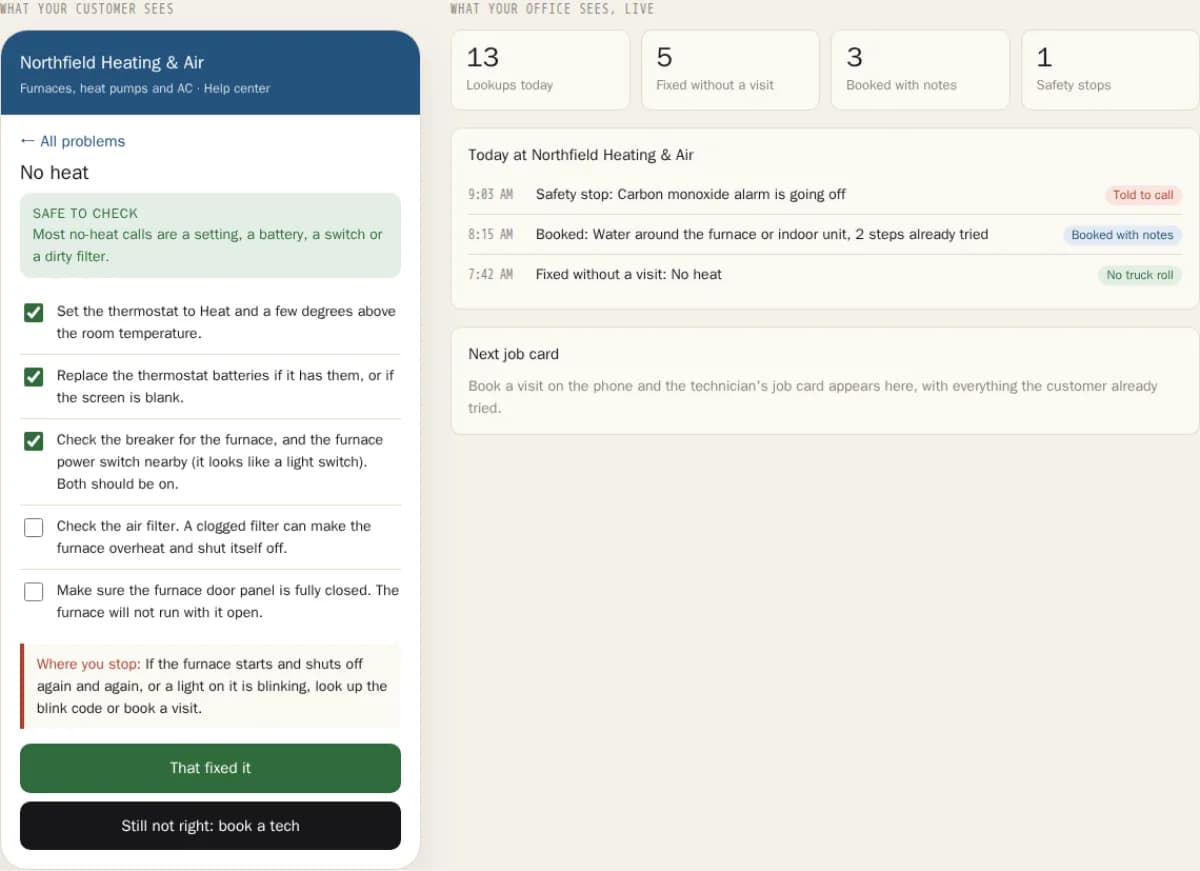
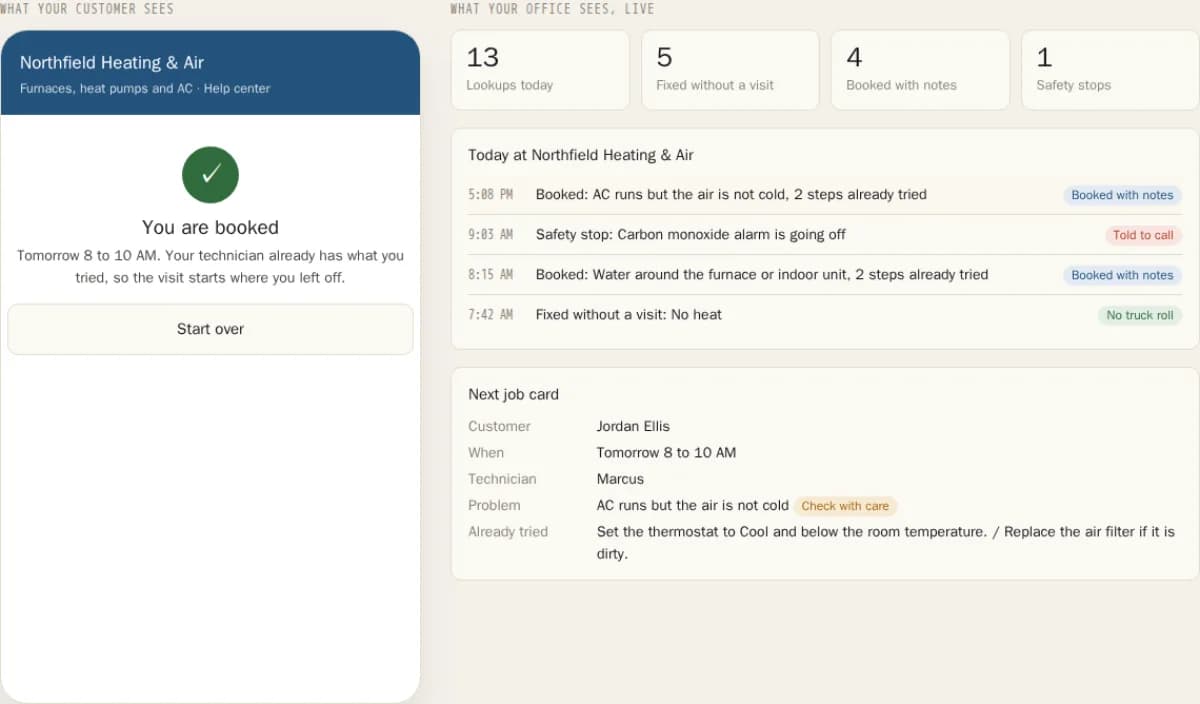
A diagnostic hub is a help center built around your own equipment. Customers describe the problem in their own words, see whether it is safe to check, follow short steps, look up an error code, and stop at the line where a technician takes over. When they book, the visit arrives with everything they already tried, and your office sees every lookup, every fix without a truck roll and every safety stop as it happens. It works the same way for any service trade.
The demo runs entirely in your browser on fictional companies. Nothing you enter is sent anywhere.
Why it pays for itself
A lot of service calls end with a reset breaker, a new battery or a clean filter. Every one of those is a truck roll a customer could have skipped, and every phone call about it is time your office spends on the same answer. A diagnostic hub takes those calls off the board and sends the real ones to your technicians with the groundwork already done.
Any trade, your equipment
The demo runs the same hub for four fictional companies in four different trades, because the pattern fits any business that fixes equipment. Yours is built around your own equipment, your codes, your service area and the stop lines your technicians set.
How it works
The customer says what is wrong, in their own words
Search or tap a common problem. Every problem is marked before they open it: safe to check, check with care, or stop and call.
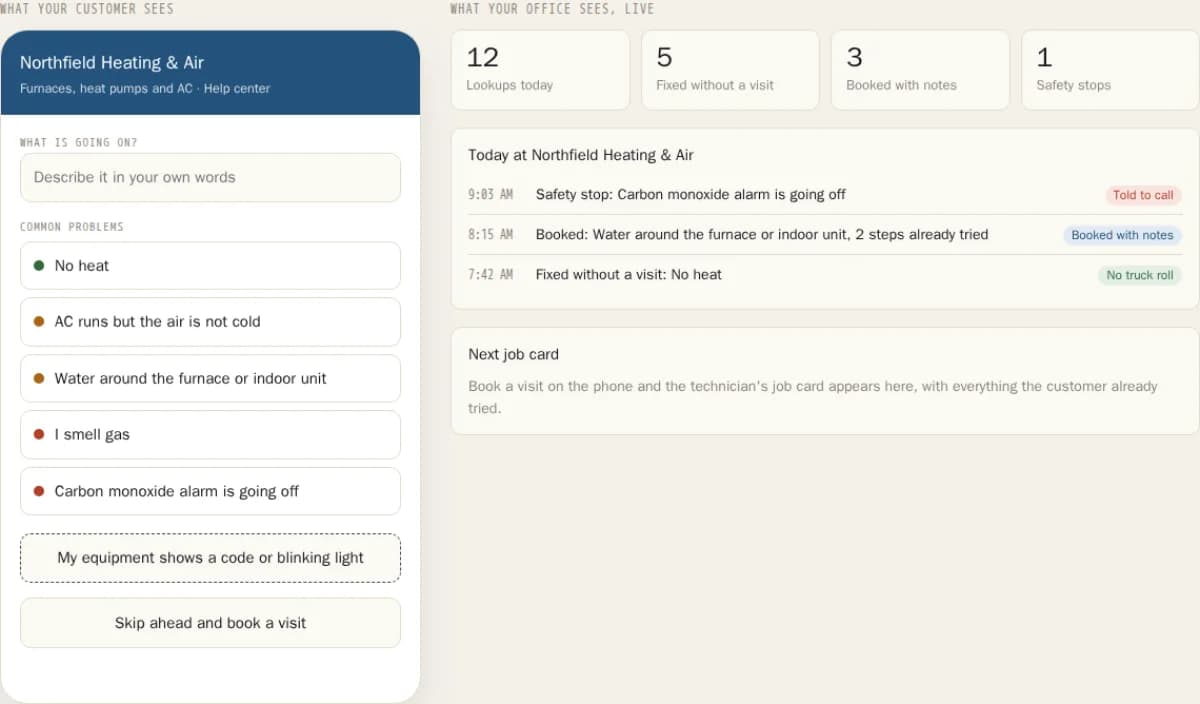
Short, safe steps they can actually do
Settings, batteries, breakers, filters: the checks that clear a lot of calls without a truck roll. Each one is ticked off as they go, and every page ends at a clear line where they stop.
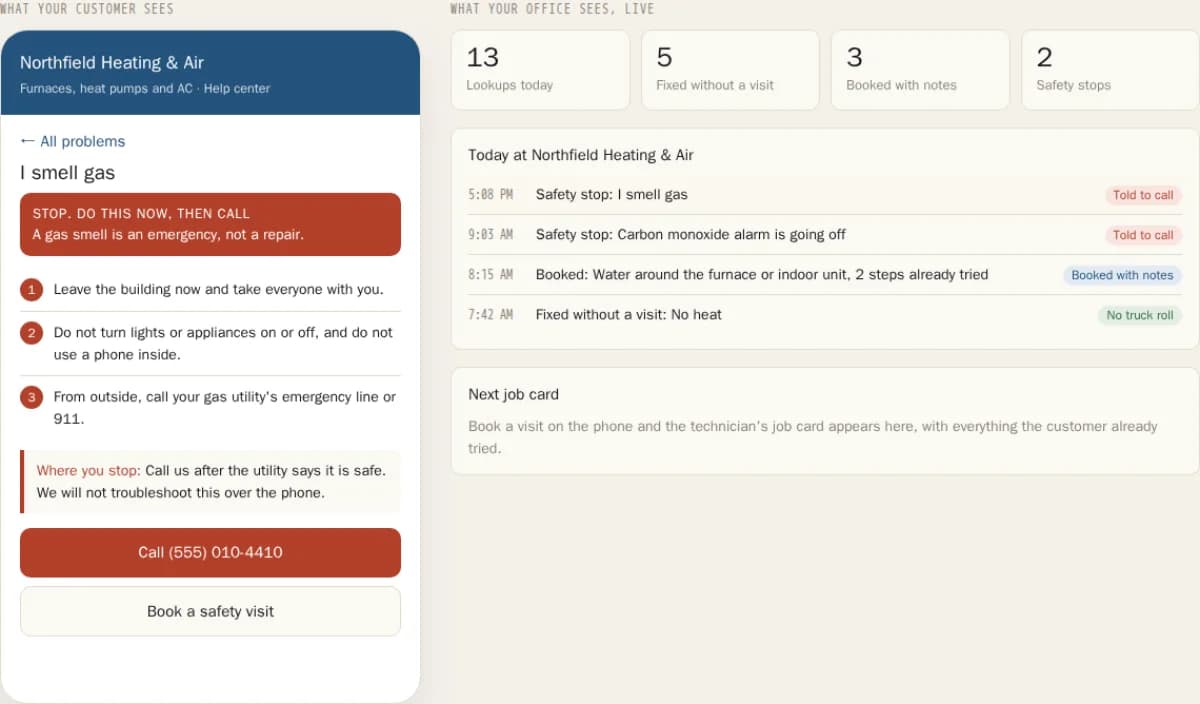
A hard stop when it is dangerous
A gas smell, a broken spring or a burst pipe never gets troubleshooting steps. The customer gets the safety step, then a button that calls you.
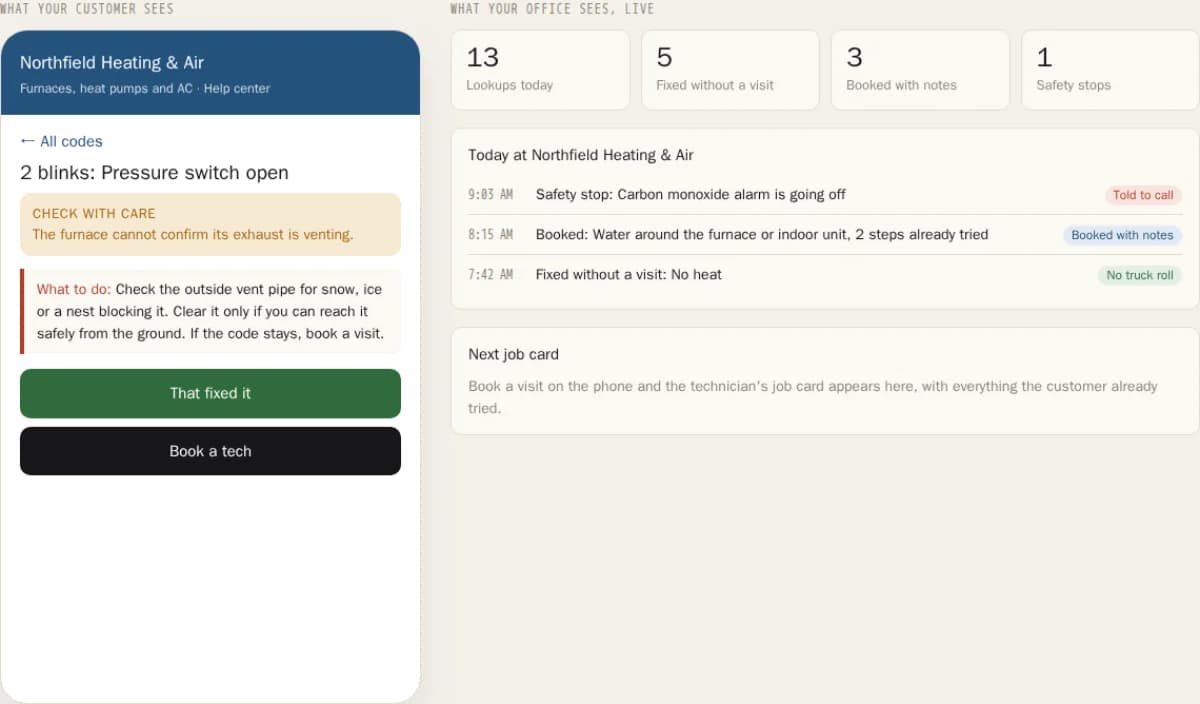
Error codes in plain English
Customers read the code or count the blinks, and get what it means and what to do, from your equipment's own documentation.
Bookings arrive with the notes
When they book, the technician's job card already lists the problem, the risk and every step the customer tried. Your office watches lookups, fixes without a visit and safety stops live.
Who it is for
- HVAC, plumbing, electrical and garage door companies
- Equipment dealers and commercial kitchen service
- Any service business whose phones ring with the same five questions
Built by Fox & Santiago for service companies in any trade.
Questions people ask
Will customers do something unsafe?
The hub decides that before they start. Anything involving gas, high tension, live electrical work or flooding shows only the safety step and a way to call you. Customer steps stay at settings, batteries, breakers, filters and what they can see.
Where does the content come from?
From your equipment, your manuals and your technicians. We build the problems, steps and codes around what your crew actually sees in the field, and your team signs off on every stop line.
Can it book into the schedule we already use?
Yes. We connect it to your existing scheduling and dispatch system, so bookings and their notes land where your office already works.
The demo runs entirely in your browser on fictional companies. Nothing you enter is sent anywhere.
Next step
Talk to us
Start with a free twenty-minute fit call. If the workflow, the sponsor and the path to access are real, the next step is a Workflow Spec.
Fox & Santiago, Genesee, Idaho. We work nationwide, for clients across the United States, from our headquarters in Genesee, Idaho.