Industry
Facilities maintenance companies
In facilities maintenance, workflows usually break at the edges of the work order: requests arrive through many client channels, get passed to a technician or subcontractor without the full scope, and close without the photos, sign-off and paperwork the client needs to pay. Fixing one means each work order carries its scope, its approved amount and its completion proof from intake to invoice.
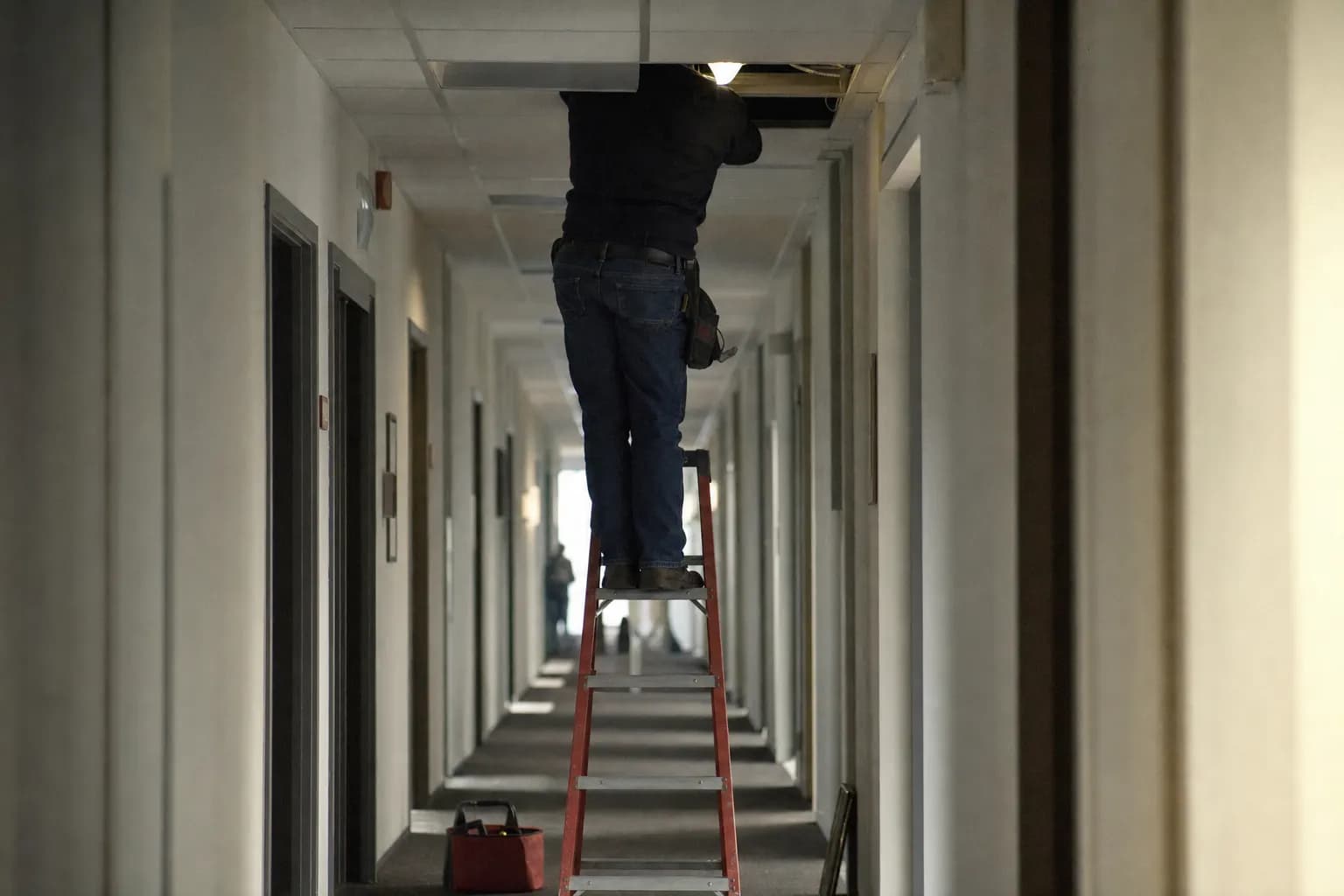
How work moves at a facilities maintenance company
A facilities maintenance company works for someone else's buildings. Clients range from a single property manager to a retail or restaurant chain with hundreds of locations. Work orders arrive by email, phone, text, and through each client's own work order system. Each client has its own rules: response times, not-to-exceed amounts, who can approve extra work, what photos and notes a completed job needs, and how invoices must be submitted.
A coordinator or call center receives the request, sorts it by urgency and trade, and assigns it to an in-house technician or a subcontractor. The technician checks in on site, does the work or finds that more is needed, and requests approval for a proposal above the limit. When the job is done, the completion package goes back: photos, notes, sign-off, and sometimes a check-out in the client's system. Then it is invoiced, often into a client portal that rejects anything incomplete.
Alongside reactive work run planned maintenance programs: filter changes, lighting, roof and gutter checks, seasonal services. The roles are coordinators, account managers, in-house technicians across trades, a subcontractor network, a vendor manager, and a billing team that spends a lot of time on compliance with each client's rules.
Where it usually breaks
Work orders are retyped from every channel
A request arrives in a client system, gets copied into your own dispatch system, then texted to a subcontractor, then updated back in the client system by hand. Every copy is a chance for the scope or the deadline to change. This is the re-entry trap. See the accounting system and the field app don't talk for the same trap one step later.
Subcontractors work from half the scope
The subcontractor gets an address and a one-line description. They do not know the not-to-exceed amount, the photo requirements, or that the store manager must sign. The job gets done and the paperwork does not. That is the handoff gap. Read subcontractors don't know what was agreed.
Proposals above the limit wait for someone
The technician finds a bigger problem. A proposal goes to the client and waits for approval, while the job sits open and the technician moves on. When approval finally comes, nobody can say who approved what amount. This is approval drag. See nobody knows who approved what.
Jobs close without what the client needs to pay
A job is done but the invoice goes out days or weeks later, or is rejected because a before photo or signature is missing. The billing team becomes a chase team. See customer sign-off is missing on finished work and invoices go out days after the work is done.
The first workflow we usually look at
For most facilities maintenance companies, it is the path from a completed work order to an accepted invoice. It crosses the technician or subcontractor, the coordinator, the billing team and the client's own system, and it is where finished work turns into money or does not. Rejected and aging invoices are a clear, countable signal of where it breaks.
We sit with coordinators and billing, ride with in-house technicians, and trace a set of recent work orders, especially rejected ones, back through every handoff. If the bigger loss is at intake or in subcontractor dispatch, the Spec says so and focuses there.
The systems in the picture
A facilities maintenance company usually runs an accounting system, a field service or dispatch app for its own technicians, and logins to several client work order systems. Some run an ERP. Then come the spreadsheets for subcontractor rates, compliance documents and planned maintenance schedules, a shared inbox that receives much of the work, and paper sign-off sheets that still travel with some crews.
We do not touch client systems or replace yours. A tool we build works through what you run, so one work order stays one work order.
What a Workflow Spec looks like here
A Workflow Spec is $15,000, fixed, and it happens on site. We sit with coordinators on a busy morning, watch billing work through completion packages and rejected invoices, ride with technicians and talk to the people who manage subcontractors. You get a map of the workflow as it runs today, where it leaks, the business case for fixing it, an adoption design that fits your technicians and your subcontractor network, and a fixed proposal for the Build. If it is not worth building, the Spec says that plainly.
Questions people ask
Our clients each send work orders their own way. Can you work with that?
That is the normal case in facilities work, not the exception. The Spec maps every channel work orders arrive through and where they are retyped, then designs around the channels you actually have to live with.
We self-perform some work and subcontract the rest. Does that matter?
A great deal. The handoff to a subcontractor is often where scope, approved amounts and completion requirements get lost. We follow both paths and compare them.
Our invoices get rejected by clients for missing paperwork. Is that a workflow problem?
Usually. A rejected invoice is often a work order that closed without the photos, sign-off or notes the client asked for. The fix is making those required before a job can close, not chasing them afterward.
We have multi-site clients with their own site rules. How do you handle that?
Site rules, access notes and contacts belong on the site record, where every technician and subcontractor sees them. The Spec checks whether that knowledge lives in a system or in a coordinator's head.
Do you replace the systems our clients make us use?
No. Client systems stay as they are. A tool we build reads from and writes to your own systems, and helps your people meet each client's requirements with less retyping.