
Industry
E-commerce and consumer brands
E-commerce and consumer brands usually break behind the storefront: orders, inventory, fulfillment partners, customer service and the books each live in their own app, and people move information between them by hand. Fixing it means an order is recorded once and every system that needs it, from the warehouse or print partner to the support inbox to the accounting system, reads the same order without anyone retyping it.
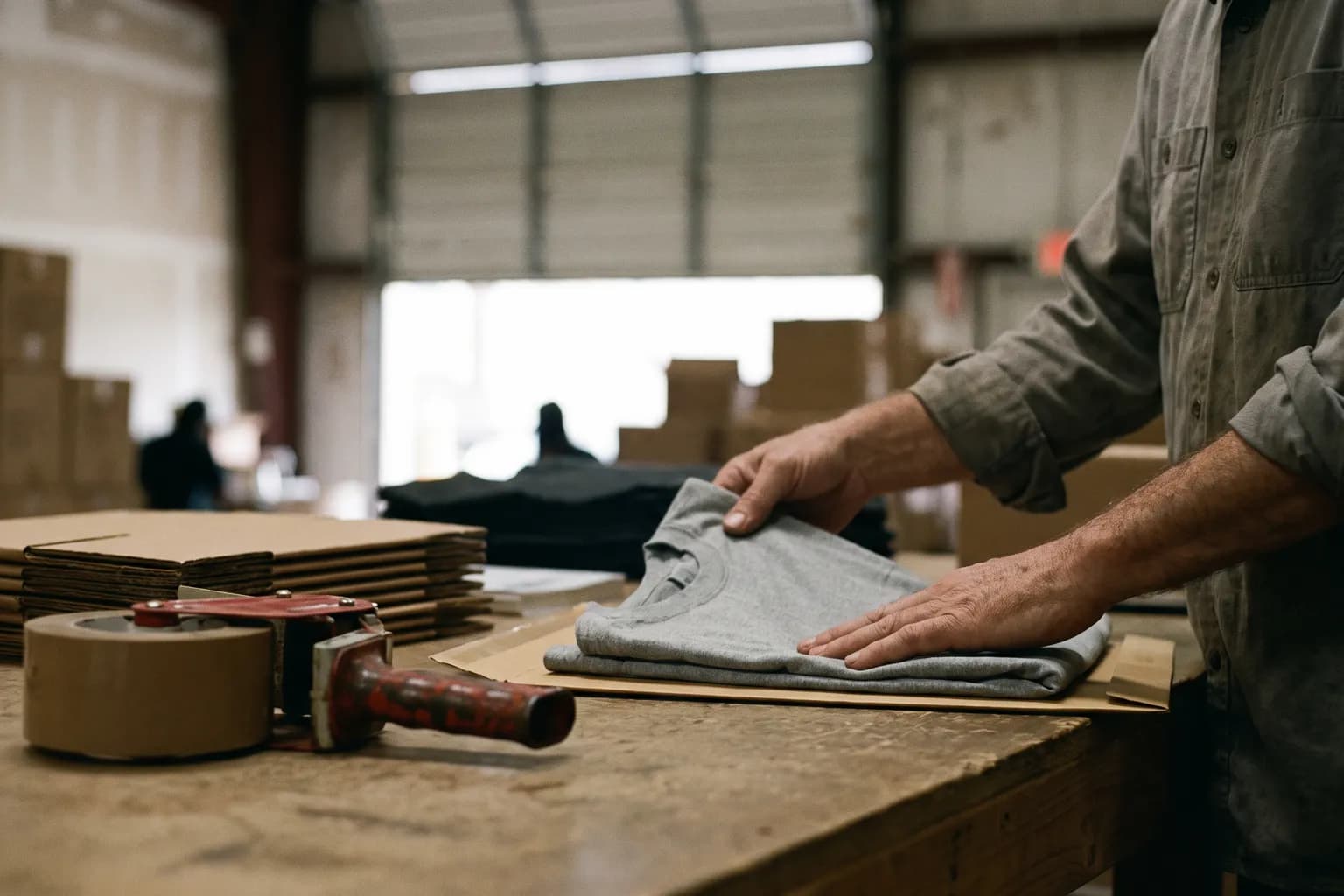
How work moves behind an online store
A customer finds the brand, picks a product and checks out. That is the part everyone sees. Behind it, the order lands in the store platform, payment is captured, and the order goes to whoever ships it: the brand's own packing room, a third-party warehouse, a print-on-demand partner or a mix by product. Inventory comes down, or should. Tracking comes back and goes out to the customer.
Then the rest of the work starts. Customers write in to change an address, swap a size or ask where the order is. Returns and exchanges come back and need inspecting, restocking and refunding. Wholesale and marketplace orders arrive on their own channels. Purchasing reorders stock or blank goods from suppliers. Accounting reconciles payouts from the payment processor and marketplaces against orders, fees and refunds, and closes the month.
The roles are founders and an operations lead, customer service, a warehouse or fulfillment contact, a merchandiser or product lead and a bookkeeper, often the same few people wearing several hats.
Where it usually breaks
Orders are copied between apps by hand
An order is exported from the store, adjusted in a spreadsheet and uploaded to the fulfillment partner. Wholesale orders are typed in from email. Every copy is a chance for the wrong variant or address to ship. That is the re-entry trap.
Orders stall at the fulfillment handoff
The partner rejects an order for a missing field, holds it for stock, or ships it without sending tracking back. Nobody sees it until the customer writes in. That is the handoff gap.
Returns, exchanges and refunds are worked one at a time
Each return is a thread in the support inbox: did it arrive, can it be restocked, was the refund issued, was the exchange shipped. The rules exist in someone's head. That is the exception swamp. See customers hear different answers.
The books disagree with the store
Payouts arrive net of fees and refunds, in batches that match no single order. Inventory in the store and inventory in the warehouse drift apart. Month-end becomes a reconciliation project. That is the field-to-office split, with the warehouse as the field. See two systems show different numbers and month-end close takes weeks.
Work we have built here
We built an apparel brand's store end to end: catalog, checkout, print-on-demand fulfillment and order alerts. Two direct-to-consumer brands run on one storefront platform we built, each with its own design, catalog and checkout. For WERCS Inc. we built its paint booth filter store with quoting and checkout. The work is described on our client work.
The first workflow we usually look at
Usually the path from a placed order to a delivered one with tracking in the customer's hands, including every place it is copied, held or changed on the way. It happens on every order, it touches the store, the fulfillment partner and support, and its gaps show up as support tickets, reships and refunds. If returns or the monthly close cost the brand more, the Spec says so and focuses there.
We sit with whoever runs fulfillment and support, follow a set of recent orders and returns from checkout to close, and count how many times each was touched by hand.
The systems in the picture
An e-commerce or consumer brand usually runs some mix of these:
- A store platform and a payment processor
- Marketplaces and a wholesale channel, each with its own orders
- A third-party warehouse, a print-on-demand partner or the brand's own packing room
- A support inbox or help desk and an email marketing tool
- An accounting system and the bank and payout reports that feed it
- Spreadsheets for inventory, purchasing, wholesale orders and returns
What a Workflow Spec looks like here
A Workflow Spec for an e-commerce or consumer brand is priced by deployment, and takes up to five business days on site. We sit with fulfillment, support and the bookkeeper, follow orders from checkout through returns to the monthly close, and interview the people who touch them. You get the workflow map, the business case, an adoption design built for the people who would use the tool, and a fixed proposal for the build. The answer can be not to build. Details are on how we work.
Questions people ask
Do you build storefronts or fix what is behind them?
Both. We have built stores end to end, and we fix the operations behind an existing store. Most of the problems costing a brand the most sit behind the checkout, not on it.
Do you replace our e-commerce platform?
Not unless the Spec shows that is the right answer. Usually a tool we build reads and writes through the platform, fulfillment and accounting systems you already run.
We use a third-party warehouse or print-on-demand partner. Can you work with that?
Yes. The handoff to a fulfillment partner is often where orders stall or change. We follow orders through it and design around the partner you have.
Our support team answers the same questions all day. Is that a workflow problem?
Usually. Where is my order, can I change my size, where is my refund: each is an answer that already exists in another system. The fix is putting it in front of the person answering, or the customer.
Do you run ad campaigns or marketing?
No. We work on how orders, inventory, fulfillment, service and the books move, not on traffic.
Next step
How we can help
Start with a free twenty-minute fit call. If the workflow, the sponsor and the path to access are real, the next step is a Workflow Spec.
- Custom operations software, built on the systems you already run
- AI implementation for operations teams
- See the WERCS case
Fox & Santiago, Genesee, Idaho. We work nationwide, for clients across the United States, from our headquarters in Genesee, Idaho.