Industry
Plumbing contractors
In plumbing, workflows usually break at the front of the job: the call is taken without the details the plumber needs, the wrong truck or the wrong parts go out, and the job turns into a second trip. Fixing one means intake captures what the site and the problem actually are, and that information reaches the plumber and the quote before the truck rolls.
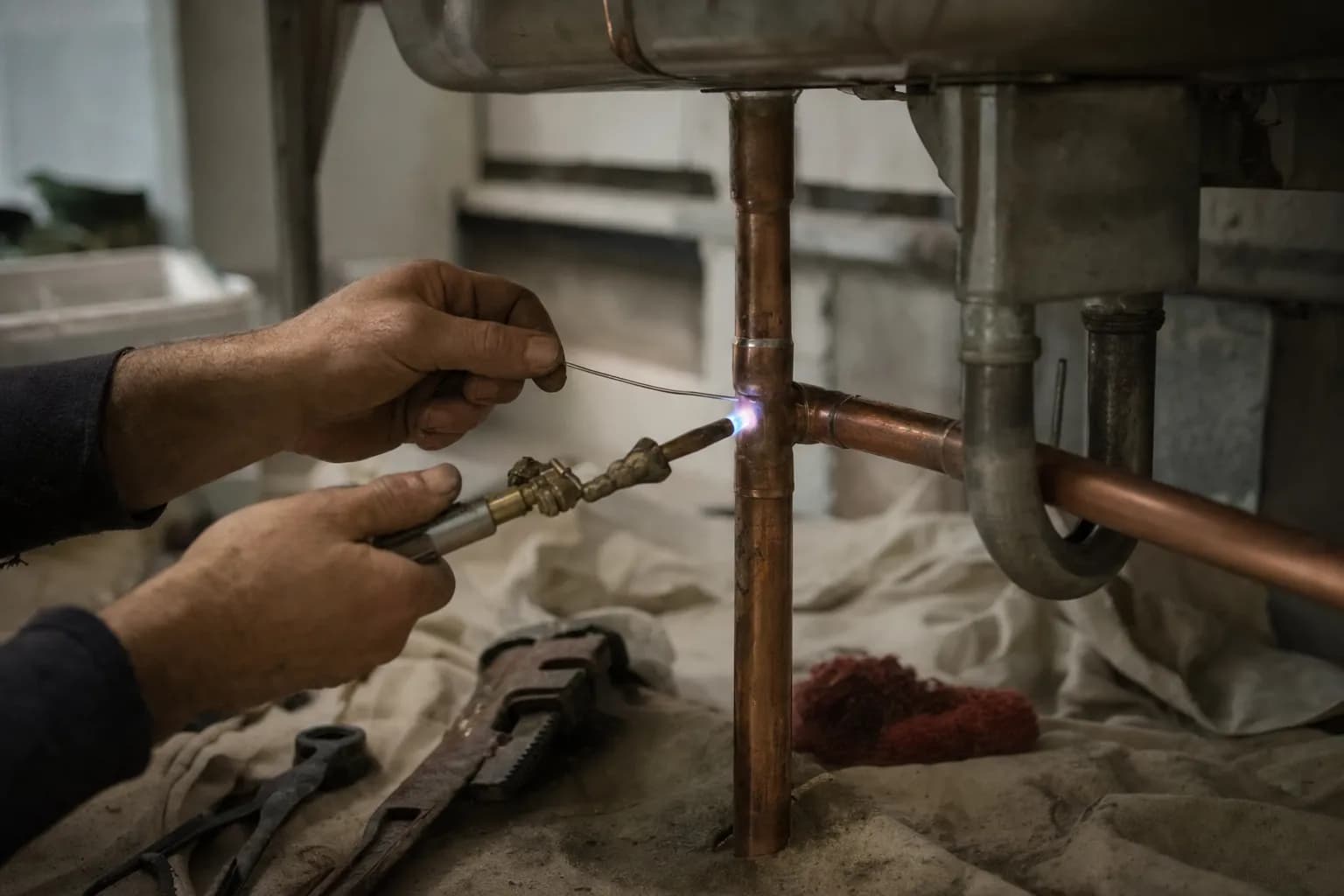
How work moves at a plumbing contractor
A plumbing service company starts every job on the phone. A customer calls about a backed-up drain, a leaking water heater, no hot water in a restaurant kitchen, or a slab leak. A customer service rep or dispatcher takes the call, books a window and assigns a plumber. What they write down in those two minutes decides a lot about the rest of the job.
The plumber arrives, diagnoses, often runs a camera or a locator, and prices the work on site, from a price book or by time and material. The customer approves, the work gets done or a return visit gets booked, and the ticket comes back for invoicing. Drain cleaning, water heaters, fixture repair and backflow testing are the daily bread. Excavation, repipes and sewer replacements are bigger jobs that need a quote, a crew and sometimes a permit.
Many plumbing companies also run a new construction or commercial side: underground, rough-in and finish on a builder's schedule. The roles include call takers, a dispatcher, service plumbers from apprentice to master, a warehouse or parts runner, a construction foreman, estimating and a small accounting team.
Where it usually breaks
The call is taken without what the plumber needs
The call taker writes "leak in basement." The plumber arrives without knowing it is a commercial building, which floor, who has access, or that the water heater is a large commercial unit. This is the handoff gap. See quote requests go unanswered in a shared inbox for the same gap on bid work.
Jobs turn into a second trip
The wrong parts on the truck, the wrong size heater, a need for a second plumber or a jetter nobody knew about. A second trip is paid for once and driven twice. That is the exception swamp, where the exceptions are handled by phone and memory. Read jobs need a second trip to finish.
Dispatch runs through one head
One dispatcher knows who can do what, who is near which job, which plumber should never go to which customer. When that person is out or buried, the board falls apart. See dispatch depends on one person, a case of the invisible queue living in someone's head.
Customers call to ask where the plumber is
A window of four hours, a job running long before theirs, and no update. The office spends the afternoon answering "when" calls instead of booking work. See customers call asking when the crew is coming.
The first workflow we usually look at
For a service-heavy plumbing company, it is usually intake through first visit: from the moment the phone rings to the moment the plumber either finishes the job or books a return. It crosses the call taker, the dispatcher, the plumber and the warehouse. The measure is simple. How many jobs are done on the first visit, and for the ones that are not, why not.
We sit with call takers, watch the dispatch board through a busy morning, and ride with plumbers. We follow a batch of recent second trips back to the call that started them. For a construction-heavy shop, the first workflow may be extra work on builder jobs instead. The Spec decides from what it finds.
The systems in the picture
A plumbing contractor usually runs an accounting system and a field service or dispatch app with a price book on the plumbers' phones or tablets. Construction work may add estimating software or a job cost module. Then there is the rest: a whiteboard or spreadsheet for the construction schedule, a shared inbox for commercial bid requests, texts between plumbers and the dispatcher, camera footage on a device, and paper test reports and work authorizations.
A tool we build uses what you already run, so the call record, the ticket and the invoice stay one job, not three.
What a Workflow Spec looks like here
A Workflow Spec is $15,000, fixed, and it happens on site. We listen to calls, sit next to dispatch, ride along on service calls and talk to the warehouse and the people who build invoices. You get a map of how the workflow runs today, where it breaks, the business case for fixing it, an adoption design that fits how your plumbers and call takers work, and a fixed proposal for the Build. If the Spec shows the fix is not worth building, it says so.
Questions people ask
Most of our calls are unplanned. Can a workflow even be fixed when every day is different?
Yes. The calls are different, but the path each one takes is not: intake, dispatch, diagnosis, price, work, invoice. The Spec looks for where that path repeats its failures, which is usually the same few places.
We do both service and new construction. Which side would you look at?
Whichever is leaking most. Service tends to lose money in second trips and late invoices. New construction tends to lose it in rough-in schedule changes and extra work that is never billed. The Spec measures both before choosing.
Our plumbers price on site. Does that change anything?
It moves the pricing decision into the truck, which is where the tool has to work. We look at how the price is chosen, how the customer approves it and whether the invoice matches what was agreed.
What about camera inspections and photos?
Footage and photos are often the best evidence for a repair recommendation and the easiest thing to lose. Where they end up, and whether the next person can find them, is part of what the Spec checks.
Can you help with testing and inspection paperwork?
We can look at how test results and inspection paperwork move from the field to the office and the customer. We do not interpret what any rule requires.
Next step
How we can help
Start with a free twenty-minute fit call. If the workflow, the sponsor and the path to access are real, the next step is a Workflow Spec.
- Field-to-office workflow automation
- Job completion to invoice: billing that follows the work
- See the WERCS case
Fox & Santiago, Genesee, Idaho. Home territory: the Inland Northwest, where we respond fastest. We fly anywhere in the United States for paid engagements.