
Industry
General contractors and construction managers
General contractors and construction managers usually break where project changes meet the field: drawing revisions, answered RFIs, submittals and schedule moves are recorded in the project management system, but the trades on site learn about them late or by phone. Fixing it means every crew starts the day knowing what changed that touches its work, what blocks it and who owns the blocker, and the punch list closes where the work is.
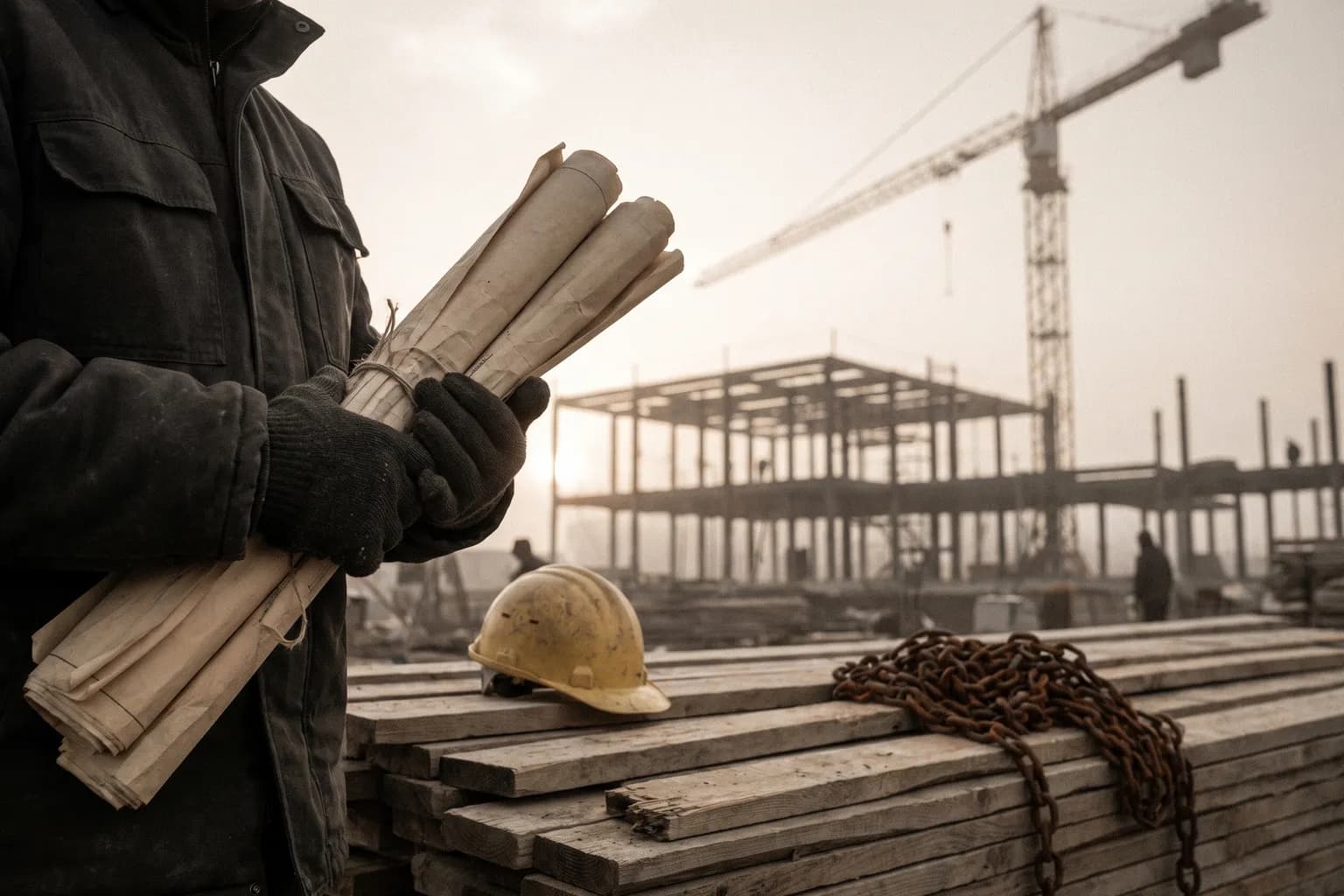
How work moves on a general contractor's projects
A project is won on a bid or negotiated, then bought out: subcontracts and purchase orders go to the trades and suppliers. Preconstruction turns drawings and specifications into a schedule, a budget and a submittal log. Then the job runs on change. The design team issues revisions. The field raises RFIs and gets answers. Submittals go out, come back approved or revised, and release material. Owners request changes, and change orders are priced, negotiated and approved.
On site, the superintendent runs the schedule, coordinates the trades, holds the morning meeting and keeps the daily log. Each trade's foreman needs to know what changed that touches their crew before they start. Inspections, safety and quality observations add their own records. Every month, the pay application is assembled from the schedule of values, the subcontractors' own pay applications, lien waivers and stored materials. At the end, punch lists, closeout documents, warranties and as-builts are collected before retainage is released.
The roles are project managers and project engineers in the office, superintendents and assistant superintendents on site, the trades' foremen and project managers, the owner's representative and the design team.
Where it usually breaks
Changes are recorded in the office and learned in the field by phone
A revision posts, an RFI is answered, a submittal comes back revised. It is in the project management system. The foreman who needs it finds out at the morning meeting, or after the work is installed. That is the field-to-office split.
RFIs and submittals wait on the next person
An RFI sits with the architect. A submittal sits with a reviewer. Work that depends on them waits, and nobody sees the chain until a crew is blocked. That is approval drag. See questions to the engineer go unanswered.
Changes in the field are settled by word of mouth
The superintendent agrees to move a wall a few inches to clear a duct. The trade does it. The change order follows weeks later, if at all, and the cost is argued at the end of the job. That is the exception swamp. See change orders wait days for sign-off.
Punch lists and closeout drag on
Punch items are written on paper or in a system the trades do not open. Closeout documents are chased from every subcontractor. Retainage waits. That is the invisible queue. See punch lists never close.
Work we have built here
Field Change Briefing is our own product, built for a superintendent running jobs across the country. It reads a contractor's Procore project every morning and tells each trade what changed since yesterday that touches its crew: new drawing revisions, answered RFIs, submittals, observations and schedule moves. It works out which crews are ready, at risk or blocked in each location, shows what moved between drawing revisions, and runs the punch list on a phone.
The first workflow we usually look at
Usually the path from a change recorded in the office to the crew it touches knowing about it before they start work. It happens every day on every active project, it touches project managers, superintendents and every trade, and its gaps show up as rework, blocked crews and change orders argued later. If pay applications or closeout cost the business more, the Spec says so and focuses there.
We stand in on morning meetings, walk the site with the superintendent and foremen, sit with project managers and engineers, and follow a set of recent changes from the moment they were recorded to the moment the field acted on them.
The systems in the picture
A general contractor or construction manager usually runs some mix of these:
- A construction management platform for drawings, RFIs, submittals and daily logs
- Scheduling software, often separate from the platform
- Estimating and an accounting or ERP system with job costing
- The owner's and design team's own systems and portals
- Group texts, email and printed drawings on site
- Spreadsheets for change logs, pay applications, closeout and buyout
What a Workflow Spec looks like here
A Workflow Spec for a general contractor or construction manager is priced by deployment, and takes up to five business days on site, on active projects. We work from the job trailer and the site, sit with project managers and accounting, and interview superintendents, foremen and the trades who live with the workflow. You get the workflow map, the business case, an adoption design built for the superintendents and foremen who would use the tool, and a fixed proposal for the build. The answer can be not to build. Details are on how we work.
Questions people ask
Do you replace our construction management platform?
No. Tools we build read and write through the platform you already run. Field Change Briefing, our own construction product, reads a contractor's Procore project and works from it.
Is this for the office or the field?
Both, and mostly the line between them. Project managers record changes in the office, and superintendents and foremen need them in the field the same morning.
Can you help our subcontractors, not only our own people?
The handoff to the trades is the center of the problem. A fix that reaches every trade's foreman with only what touches their crew is designed in.
What about pay applications and closeout?
Both are fair first workflows. Pay applications and closeout packages are assembled by hand from many sources, and the time it takes is countable.
Do you work on single large projects or across a portfolio?
Either. Field Change Briefing was built for a superintendent running jobs across the country, so it was designed for many projects at once from the start.
Next step
How we can help
Start with a free twenty-minute fit call. If the workflow, the sponsor and the path to access are real, the next step is a Workflow Spec.
- Field-to-office workflow automation
- Custom operations software, built on the systems you already run
- See the WERCS case
Fox & Santiago, Genesee, Idaho. We work nationwide, for clients across the United States, from our headquarters in Genesee, Idaho.