Problem guide
Reorders happen only when something runs out
Reorders wait until a part runs out when nobody has set a reorder point and nobody can see stock falling toward it. Set a simple reorder level for the parts that matter most, check them on a fixed day, and make one person responsible for placing the order.
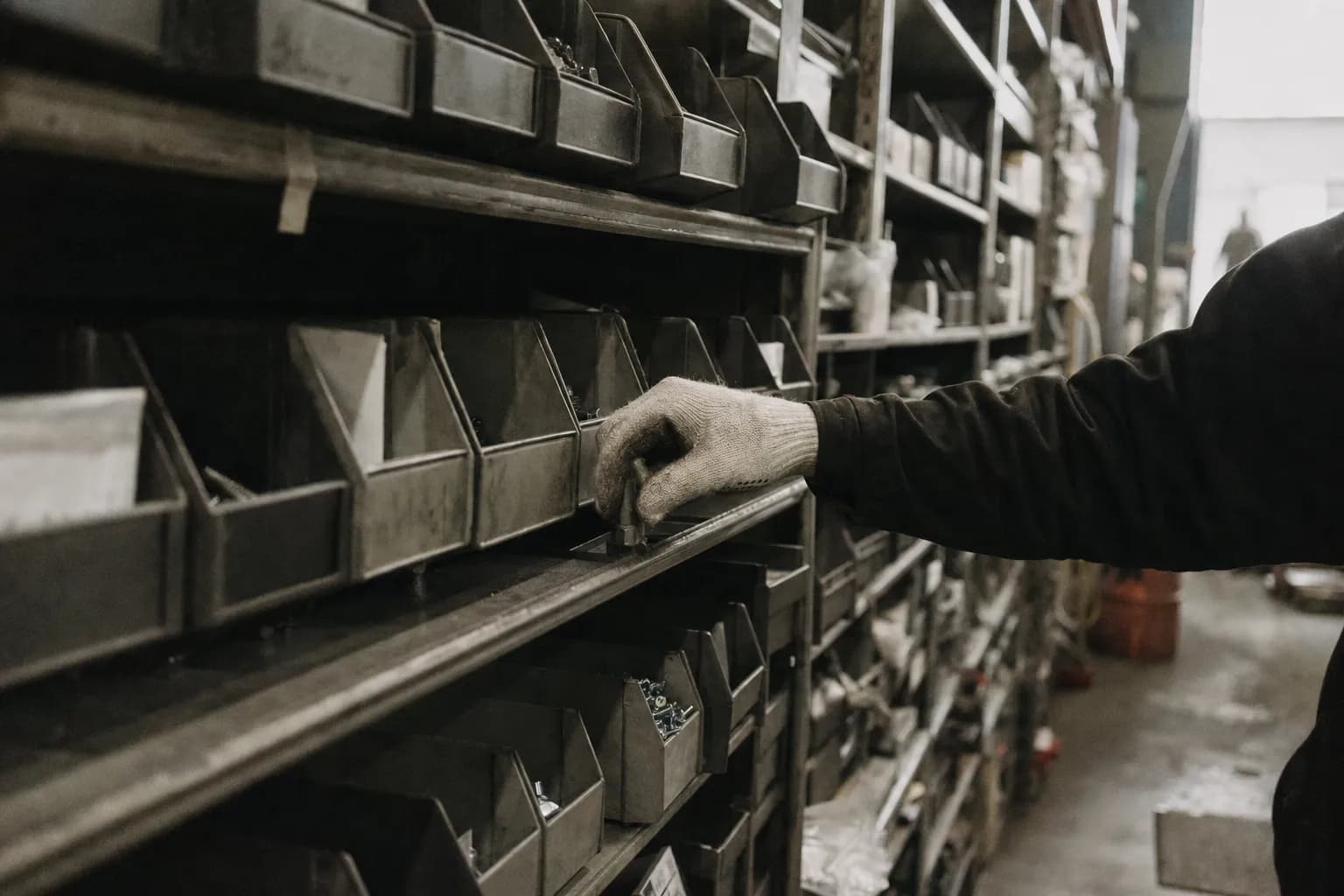
What it usually looks like
A technician reaches into the stock room for a common capacitor and finds the bin empty. He grabs one from another truck and tells the office manager on the way out. She adds it to a sticky note of things to order. Two days later the note has six items on it and gets typed into an order. Meanwhile two more technicians have gone to the supply house for the same capacitor at counter prices. Next month it happens again, because nobody changed when the order gets placed.
Signs you have this problem
- A crew finds an empty bin and the first reorder happens that day
- Rush shipping and supply house runs are routine for common parts
- The same parts run out again and again
- Reorders depend on one person noticing a shelf looks low
What usually causes it
- Nobody sees stock falling until the bin is empty, because usage is not recorded as it happensThe invisible queue
- Reordering is part of someone's job only informally, so it happens when they noticeThe handoff gap
- Parts are pulled in the field and the shop, but stock levels are tracked in the officeThe field-to-office split
What to try this week
- List the parts that ran outFor the last two months, list every part that ran out and what it cost you: rush freight, supply house runs, or jobs delayed.
- Set a reorder level for those partsFor each part on the list, estimate how many you use in the time it takes to restock, and add a small cushion. That is its reorder level.
- Mark the level on the shelfPut a tag or line in the bin at the reorder level. When stock hits the tag, it is time to order, not when the bin is empty.
- Check on a fixed dayPick one day a week to walk the tagged parts and place orders. A fixed day beats noticing.
- Name one person to reorderOne person owns reorders for stock. Anyone who pulls the last part above the tag tells that person the same day.
Where do-it-yourself stops
These steps move reorders earlier for the parts that hurt most. They still depend on someone walking the shelves and on usage that is only partly recorded. A lasting fix needs a tool built around your own stock, jobs and suppliers, so usage is recorded as parts leave and a part below its level shows up on a reorder list without anyone walking to the bin. That is what a Workflow Spec designs.
Questions people ask
Why do reorders happen only when something runs out?
Because nobody can see stock falling in time, and reordering belongs to no one in particular, so the empty bin becomes the signal.
How do we set a reorder level without data?
Start with an estimate from the people who use the part. Adjust it after each cycle based on whether you ran short or ran heavy.
Should we just keep more stock?
More stock hides the problem and ties up cash. Reorder levels on the right parts usually beat overstocking everything.
Which parts should we start with?
The ones that ran out recently and the ones that stop a job when missing. Leave slow movers for later.
What about truck stock?
The same idea works for trucks, with a restock list for each truck. Get the warehouse working first.
Next step
Want this fixed for good?
This guide is how to find it and work around it. If it keeps coming back, the fix is usually a tool built around how your crew already works. Start with a free twenty-minute fit call.
Fox & Santiago, Genesee, Idaho. Home territory: the Inland Northwest, where we respond fastest. We fly anywhere in the United States for paid engagements.