Problem guide
Nobody knows what is in the warehouse
Nobody knows what is in the warehouse when stock goes in and out without being recorded and the only reliable map is in one or two people's heads. Give every item a fixed place, record every movement at the door, and count small sections often instead of the whole building once a year.
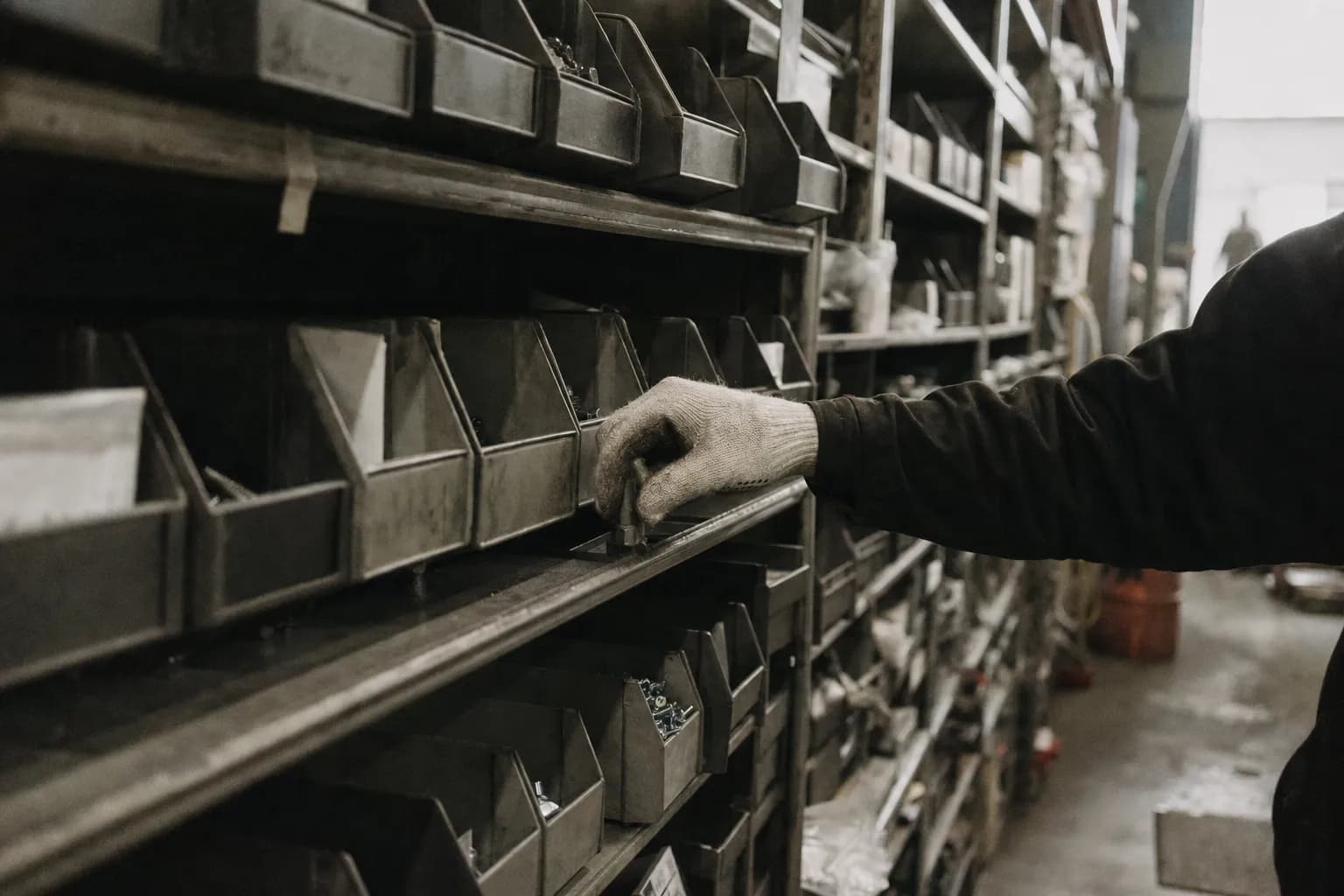
What it usually looks like
An estimator needs to promise a customer a start date and asks whether the warehouse has the valves. The system says six. He calls the warehouse lead, who is at lunch. When she calls back she says there were six, but a crew took four last week, and there might be two more on the return pallet from the school job. Nobody knows where the return pallet ended up. The estimator orders six new valves to be safe. A month later a count finds the old ones on a top shelf behind a stack of duct.
Signs you have this problem
- The office calls the warehouse lead to ask if a part is on hand before quoting a date
- Parts get bought new while the same parts sit on a back shelf
- Leftover material from finished jobs piles up with no label or job
- The yearly count takes days and the adjustment afterward is large
- When the warehouse lead is out, nobody can find anything
What usually causes it
- Items come in and go out through several doors and people, and only some of those movements get recordedThe field-to-office split
- Locations are not fixed, so the only map of where things are lives in one person's memoryThe handoff gap
- Returned and leftover material has no process, so it becomes a pile nobody ownsThe exception swamp
What to try this week
- Ask the same question three waysPick twenty items. Check what the system says, ask the warehouse lead, then go count. Where the three answers differ tells you whether the problem is recording, memory or location.
- Walk every way stock leavesList every door and person that takes material out: will call, crews, transfers to trucks, returns. Mark which of them get recorded and which do not.
- Give one aisle fixed locationsChoose one aisle, label every shelf, and record each item's location. See whether people can find things there without asking.
- Count one section every weekCount a different small section each week instead of waiting for the yearly count. Record the gaps and what caused them.
- Clear the leftover pile onceSort unlabeled leftovers into put away, return, or scrap in one afternoon. Then set a rule that nothing goes on that pile without a job and a date.
Where do-it-yourself stops
These steps show you where the warehouse record breaks and make part of it trustworthy. They do not make every movement recorded as it happens, which is the only way the record stays right when the busy season hits. That needs a tool built around your own warehouse, your jobs and your inventory system, so taking something off a shelf and recording it are the same step. That is what a Workflow Spec designs.
Questions people ask
Why does nobody know what is in the warehouse?
Because material moves through more doors and hands than get recorded, and the map of where things are lives in someone's head.
Is a yearly count enough?
It fixes the numbers for a day. Small weekly counts show you where drift comes from, which a yearly count cannot.
Do we need barcodes?
Not to start. Fixed, labeled locations and recording at the door matter more. Scanning helps once those habits exist.
What about leftover material from jobs?
Treat it as stock. It needs a location, a record and an owner, or it turns into a pile that gets bought again.
How do we measure the cost?
Track how often parts are bought while the same parts are on the shelf, and how long people spend looking. Measure your own before estimating.
Next step
Want this fixed for good?
This guide is how to find it and work around it. If it keeps coming back, the fix is usually a tool built around how your crew already works. Start with a free twenty-minute fit call.
Fox & Santiago, Genesee, Idaho. Home territory: the Inland Northwest, where we respond fastest. We fly anywhere in the United States for paid engagements.