Industry
Fire protection and life safety contractors
In fire protection and life safety, workflows usually break after the inspection: deficiencies are found, written up and then wait in a report nobody turns into a quote, a repair and a clean re-inspection. Fixing one means every deficiency becomes a tracked item with an owner, a price and a next step the day the inspector finds it.
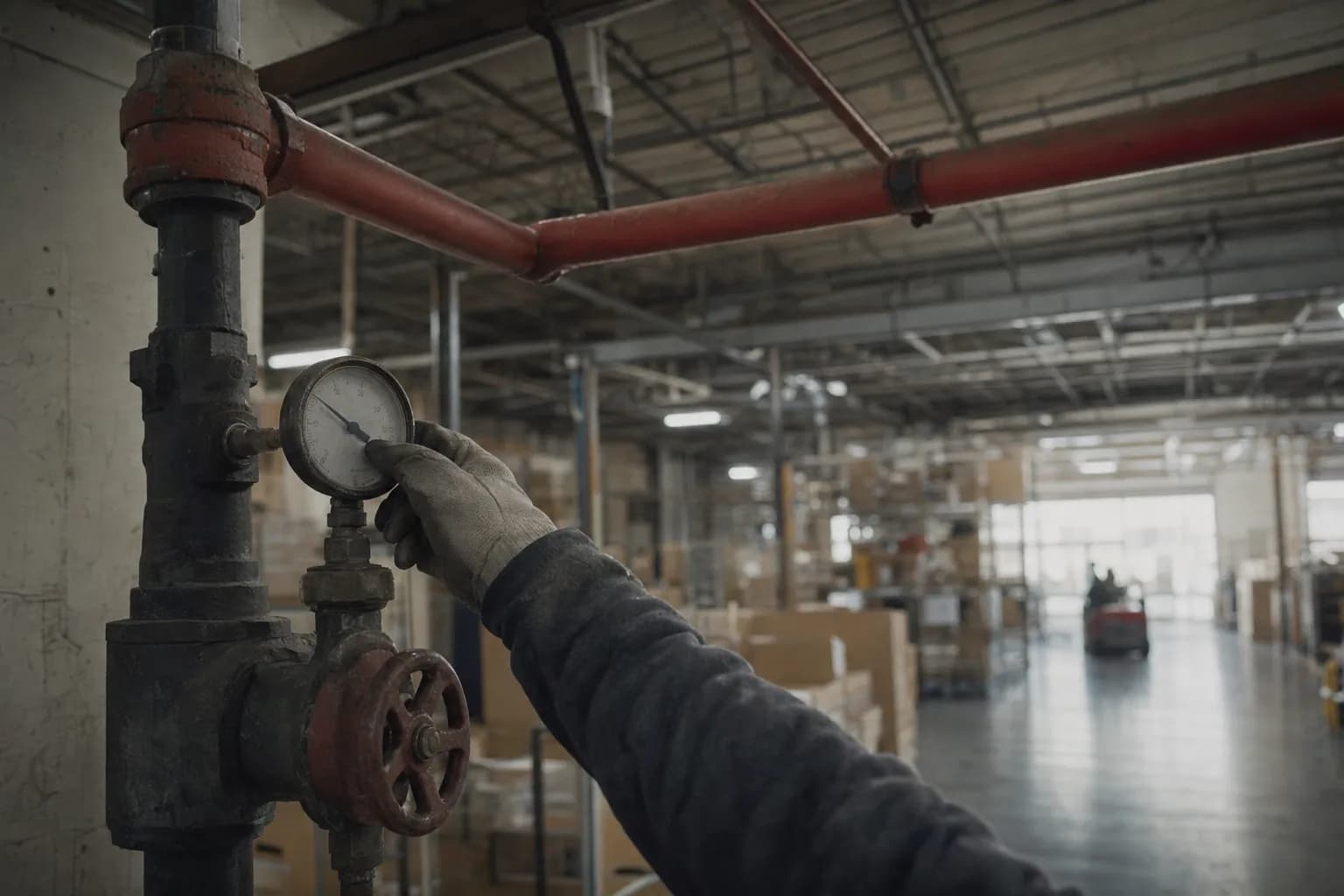
How work moves in fire protection and life safety
Fire protection companies are built on the recurring inspection. Sprinkler systems, fire alarm panels, pumps, backflow assemblies, extinguishers and kitchen hood systems all come due on a cycle set by contract. An inspection coordinator builds the calendar, calls the building contact, arranges access and sends an inspector with the site's history in hand, or without it.
The inspector tests, records results and notes deficiencies. The report goes back to the office, gets reviewed and sent to the customer and sometimes to the local fire official. The deficiencies are where the next piece of revenue sits: a repair quote, a service visit by a fitter or alarm technician, and a follow-up that proves the item is fixed.
Alongside that runs the project side: design and layout, hydraulic calculations, permit submittals, material, installation crews and acceptance testing. Many companies also run monitoring. The roles are distinct: inspectors, sprinkler fitters, alarm technicians, designers, coordinators, service sales and accounting, and they do not always sit near each other.
Where it usually breaks
Deficiencies wait in a report
The inspector writes up a failed tamper switch and a corroded head. The report is sent. The deficiency list sits in a PDF until someone in service sales reads it, prices it and sends a quote. Days become weeks. This is the handoff gap. See open quotes never get followed up.
Reports and paperwork run behind the work
Inspectors finish the test on site and write the report later from notes, photos and memory. Reports queue for review. Customers call asking for documents they need for their own records. The guide on safety and compliance paperwork is always behind covers the shape of it, and the underlying pattern is often the re-entry trap, where results are written once in the field and again in the office.
The inspection calendar slips quietly
Inspections owed are tracked in a scheduling tool, a spreadsheet, or both. When crews are pulled onto repairs or projects, inspections slide, and nobody sees the size of the backlog until a customer or an official asks. That is the invisible queue, and preventive maintenance visits keep slipping applies directly.
Every visit starts from zero on site knowledge
Where the riser room is, who has the key, which panel is which, what failed last year. That knowledge lives with the one inspector who has been there before. See repeat customers have to explain their site every time.
The first workflow we usually look at
For an inspection-heavy company, it is almost always the path from a deficiency found on site to a repair completed and documented. It starts with the inspector, passes through report review and service sales, lands with a fitter or technician, and ends with the customer and sometimes the official. Every handoff is a place a deficiency can stall, and a stalled deficiency is both lost work and an open item on a customer's building.
We ride along on inspections, watch reports get reviewed, and follow a set of recent deficiencies from discovery to close. We count how long each one sat and where. If the bigger leak turns out to be in scheduling or report turnaround, the Spec follows that instead.
The systems in the picture
A fire protection company usually runs an accounting system, an inspection or field service app on tablets, and sometimes a separate tool for design or estimating. Many also keep an ERP or a project system for installation work. Around those sit spreadsheets for inspection schedules and deficiency tracking, shared folders full of reports, and paper tags and forms that still travel in the truck.
We build to read from and write to the systems you already use, so a deficiency never has two versions in two places.
What a Workflow Spec looks like here
A Workflow Spec is $15,000, fixed, and it happens on site. We go out with inspectors and technicians, sit with the coordinator who builds the calendar and the people who review reports and write repair quotes, and follow real deficiencies through your office. You get a map of the workflow as it runs today, where items stall, the business case for fixing it, an adoption design for the people who would use the tool, and a fixed Build proposal. If the answer is that it should not be built, the Spec says so.
Questions people ask
Most of our revenue is recurring inspections. Where do those workflows break?
Usually not in the inspection itself but in what follows it: the report, the deficiency list, the repair quote and the follow-up visit. The Spec measures how long deficiencies sit before anyone acts on them.
Do you tell us what our inspections must include?
No. What an inspection covers, how often it happens and what a report must say are set by your contracts, your jurisdictions and your own expertise. We work on how the work and the paperwork move, not on what the rules require.
Our inspectors, fitters and alarm techs all work differently. Can one tool fit?
Each Build is scoped to a named group of users. That is on purpose. We start with the group whose workflow is leaking most and design around how they actually work.
Customers keep asking for copies of old reports. Is that something you fix?
It can be, if it is costing office time or losing follow-up work. It is often a sign that reports live in email and folders instead of attached to the site and its equipment.
Do you work on monitoring or design and permit work?
We look at any workflow that moves between people. Design submittals, permit paperwork and monitoring account changes all have handoffs. The Spec picks the one worth fixing first.