Problem guide
Special-order parts get lost after they arrive
Special-order parts get lost after they arrive because receiving treats them like stock and nobody tells the person who scheduled the job. Tag every special order to its job at the dock, give those parts one known shelf, and tell scheduling the day the part lands.
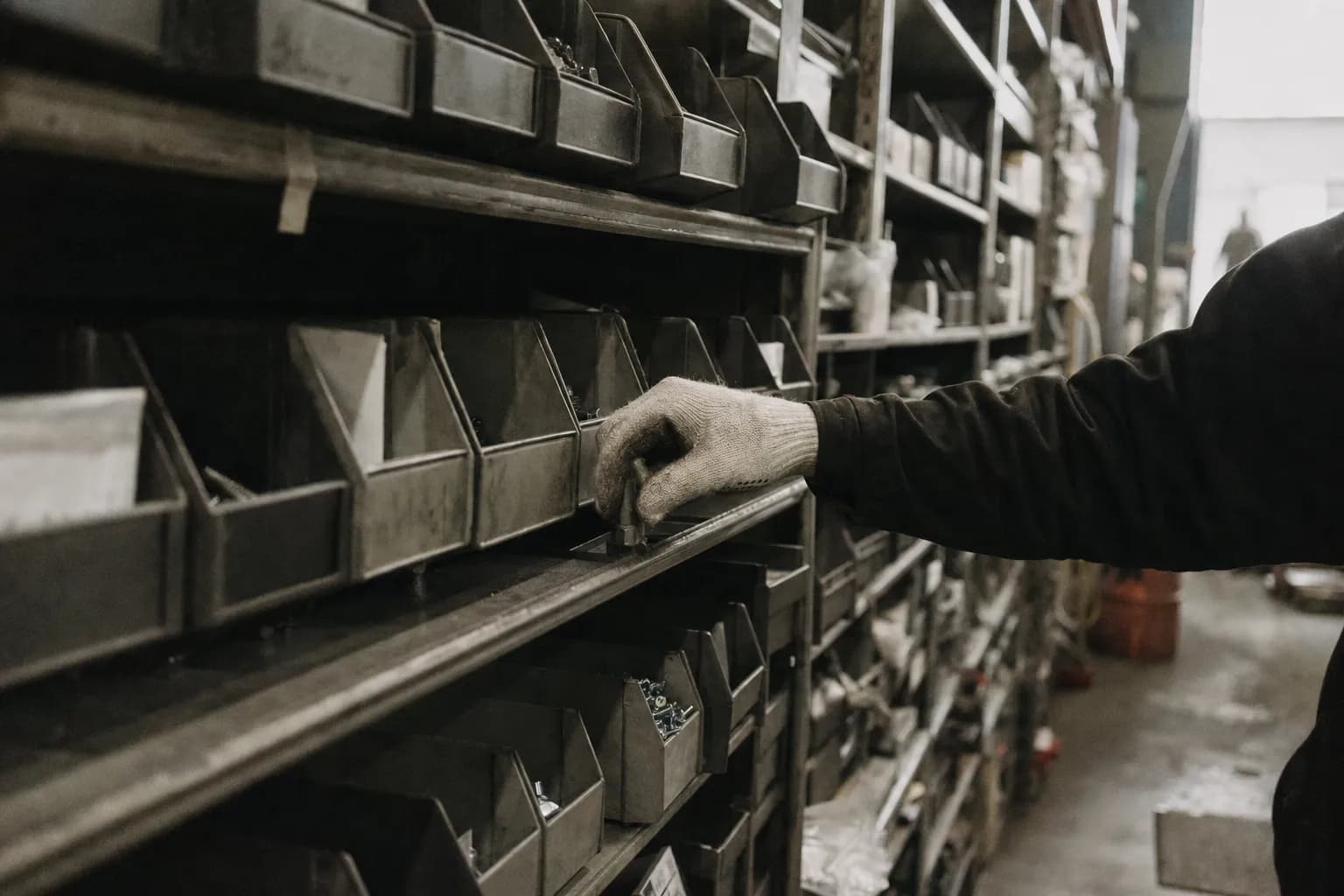
What it usually looks like
A service manager orders a control board for a customer's walk in cooler. It will take ten days. The board arrives on a Tuesday while he is on a site visit. The receiver checks it in, sees a part number that matches a stock item, and puts it on the shelf with the others. The following Monday the customer calls to ask about the repair. The service manager calls the vendor, who says it was delivered a week ago. It takes an hour to find, and by then a technician has already used it on another job.
Signs you have this problem
- A customer calls to ask when you are coming, and the part has been on your shelf for a week
- Crews search the warehouse for a part the vendor says was delivered
- A special-order part gets used on a different job and has to be ordered again
- The job is not scheduled because nobody told dispatch the part came in
What usually causes it
- Receiving does not know which job a special order belongs to, so it gets shelved with stockThe handoff gap
- Parts that arrived and are waiting for a job are not on any list anyone checksThe invisible queue
- The person who ordered the part is in the field or on the phone, so the arrival never reaches themThe field-to-office split
What to try this week
- Walk the shelves for orphansLook for boxes with no job attached that are not normal stock. For each one, find the job it was ordered for and how long it has been sitting.
- Mark special orders on the orderHave whoever orders a special part write the job name or number on the order so it prints on the packing slip or label.
- Use one shelf for special ordersSet aside one labeled shelf for special orders waiting on a job. Nothing else goes there, and nothing leaves without a job.
- Tell scheduling the day it arrivesWhoever receives a special order sends one message to the scheduler with the job and the part. Keep a simple list of parts waiting to be scheduled.
- Check the shelf twice a weekAnything on the special orders shelf longer than a few days gets a question: is the job scheduled, and if not, why not.
Where do-it-yourself stops
These steps get special orders onto a known shelf and in front of the scheduler. They rely on receiving and the scheduler remembering to talk every time. A lasting fix needs a tool built around your own ordering, receiving and scheduling, so a special order stays tied to its job from the order to the truck and the job becomes ready to schedule when the part lands. That is what a Workflow Spec designs.
Questions people ask
Why do special-order parts get lost after they arrive?
Because the connection to the job lives with the person who ordered it, not on the box, so receiving treats it like any other part.
Who should own a special order after it arrives?
One person, often the scheduler or service coordinator, owns getting it onto a job. Receiving owns putting it on the right shelf and telling them.
What if the job gets cancelled?
Decide the next step the day you know: return it, keep it as stock, or hold it for the customer. A part without a decision becomes an orphan.
Does the vendor's tracking help?
It tells you the part was delivered. It does not tell you where it went inside your building or which job is waiting.
How do we know how often this happens?
Count the orphans in your first shelf walk and the days each waited. Repeat in a month to see if it improved.
Next step
Want this fixed for good?
This guide is how to find it and work around it. If it keeps coming back, the fix is usually a tool built around how your crew already works. Start with a free twenty-minute fit call.
Fox & Santiago, Genesee, Idaho. Home territory: the Inland Northwest, where we respond fastest. We fly anywhere in the United States for paid engagements.