
Industry
Logistics and third-party warehousing
Logistics and third-party warehousing companies usually break at the dock and the billing desk: each client sends orders and receipts its own way, exceptions like shorts, damages and holds are settled by email, and accessorial charges for the extra work are lost before the invoice. Fixing it means every client order and every exception is recorded once, on the floor, with its owner and its charge, and billing is built from what the floor recorded.
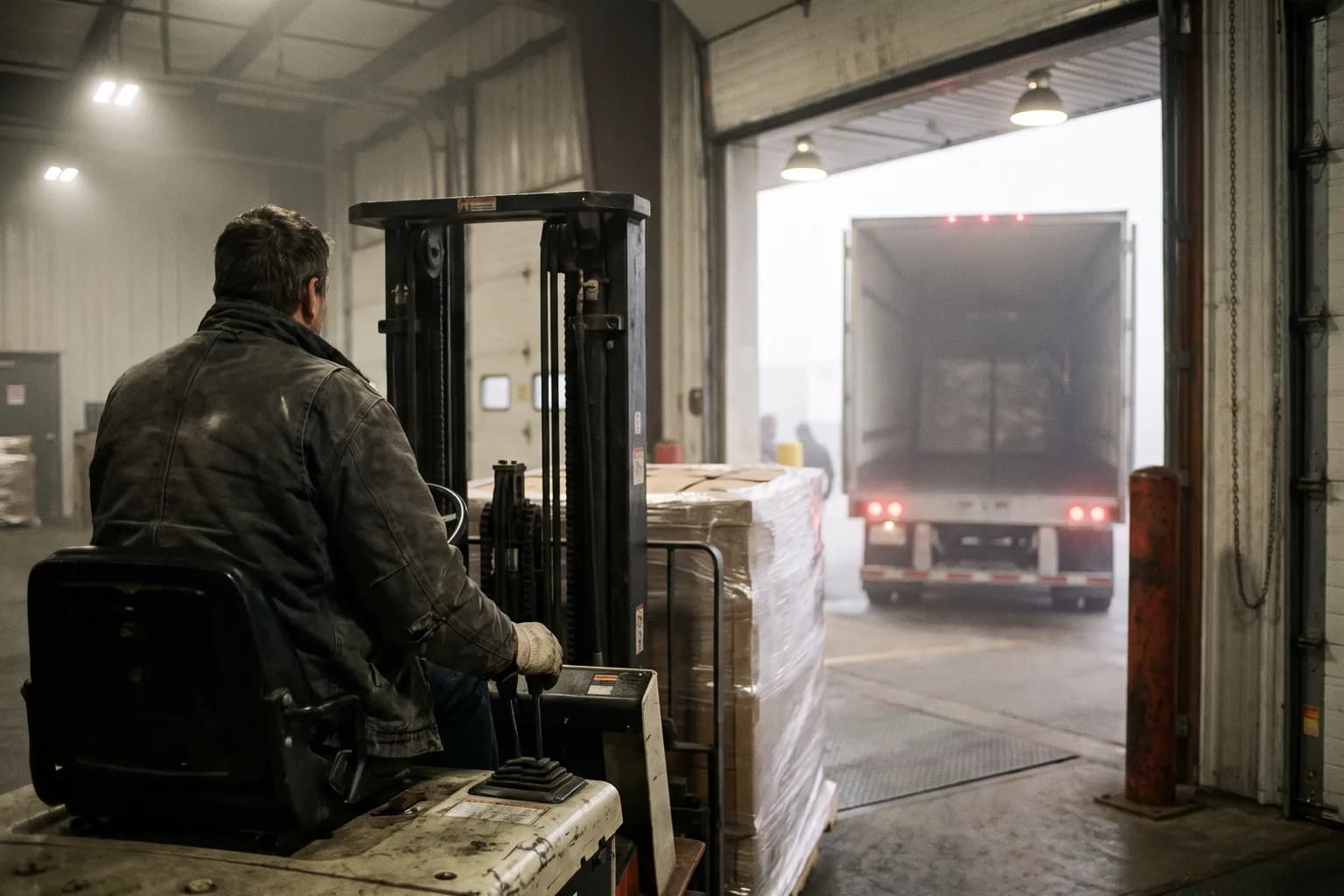
How work moves in logistics and third-party warehousing
The work belongs to someone else. A client sends inbound shipments with an advance notice, or without one. The dock receives, counts, inspects and puts away, and reports what arrived back to the client. Orders come in through EDI, a client portal, an integration with the client's store or a spreadsheet by email. The floor picks, packs, labels to each client's rules and stages for the carrier. Trucks are booked, loaded, tracked and delivered, and proof of delivery comes back.
On the transportation side, a broker or carrier takes a load, books a truck, tracks it, and handles the appointment changes, detention and claims that come with it. Throughout, the client wants to know where their goods are.
Billing runs on rates per pallet, per order, per pick and per day in storage, plus accessorial charges for everything outside the standard: relabeling, special handling, rush orders, detention. The roles are account managers or client service reps, receiving and shipping leads, pickers and forklift operators, inventory control, dispatchers or brokers, and a billing team that reconciles the floor to each client's rate sheet.
Where it usually breaks
Each client's orders arrive a different way
One client integrates, another emails a spreadsheet, a third calls in rush orders. Client service retypes the stragglers into the WMS. Errors show up as wrong shipments charged to the warehouse. That is the re-entry trap.
Dock exceptions are settled by email
A shipment arrives short, damaged or without paperwork. The dock lead takes a photo, holds the pallet and emails the account manager, who emails the client. The pallet sits until someone answers. That is the exception swamp. See billing disputes take weeks, which is where these end up.
Extra work never reaches the invoice
The client asks for a relabel or a rush. The floor does it. Whether it was recorded, by whom and at what rate decides whether it is billed, and often it is not. That is the field-to-office split. The guide on extra work that never gets billed shows how to measure it.
The client cannot see what is happening
Inventory in the WMS and the client's own count disagree. Where a load is lives in a dispatcher's phone. Client service spends its day answering status questions. That is the invisible queue. See nobody knows what's in the warehouse.
The first workflow we usually look at
Usually the path from work done on the floor to a billed charge: the receipts, orders, storage days and accessorial work for one client's month, traced from the dock to the invoice and compared to the client's rate sheet. It is where finished work turns into money or does not, and the gap is countable. If inbound exceptions or order intake cost the business more, the Spec says so and focuses there.
We stand on the dock through receiving and shipping, sit with client service and billing, and follow a set of recent orders and exceptions from arrival to invoice.
The systems in the picture
A logistics or third-party warehousing company usually runs some mix of these:
- A warehouse management system and handheld scanners
- A transportation management system or load board, for those that move freight
- EDI and integrations with clients' stores and ERPs
- Client portals and carrier portals
- An accounting system and a billing spreadsheet per client
- Email and phones for exceptions, appointments and status
What a Workflow Spec looks like here
A Workflow Spec for a logistics or third-party warehousing company is priced by deployment, and takes up to five business days on site. We work the dock with receiving and shipping leads, sit with client service, dispatch and billing, and interview the people who touch a client's goods from arrival to invoice. You get the workflow map, the business case, an adoption design built for the floor leads and staff who would use the tool, and a fixed proposal for the build. The answer can be not to build. Details are on how we work.
Questions people ask
Which companies is this page about?
Third-party warehouses and fulfillment centers, freight brokers and small carriers, and cross-dock and transload operations: companies that move or hold other companies' goods and bill them for it.
Do you replace our warehouse management or transportation system?
No. Tools we build read and write through the WMS, TMS and accounting systems you already run and never become a second system of record for inventory or loads.
Every client wants something different. Can a tool handle that?
That is the normal case in third-party work. The Spec maps each client's real requirements, which ones the WMS already handles and which ones live in a lead's head, and designs around them.
We do extra work for clients that never gets billed. Is that common?
It is one of the most common leaks we look for. Relabeling, rework, special handling and detention happen on the floor and disappear before billing. The Spec counts them.
Can a tool work on the dock with gloves and scanners?
It has to. Tools we build are specified around the real conditions on the floor, including the devices the crew already carries.
Next step
How we can help
Start with a free twenty-minute fit call. If the workflow, the sponsor and the path to access are real, the next step is a Workflow Spec.
- Field-to-office workflow automation
- Custom operations software, built on the systems you already run
- See the WERCS case
Fox & Santiago, Genesee, Idaho. We work nationwide, for clients across the United States, from our headquarters in Genesee, Idaho.