Industry
Specialty manufacturers
Specialty manufacturers usually break between the quote and the floor: what sales promised, what engineering changed on the drawing and what the customer approved live in separate places, and the job traveler reaches the floor carrying only part of it. Fixing it means the order, the current revision and every agreed exception reach the first work center together, and the floor's questions get answered before the material is cut.
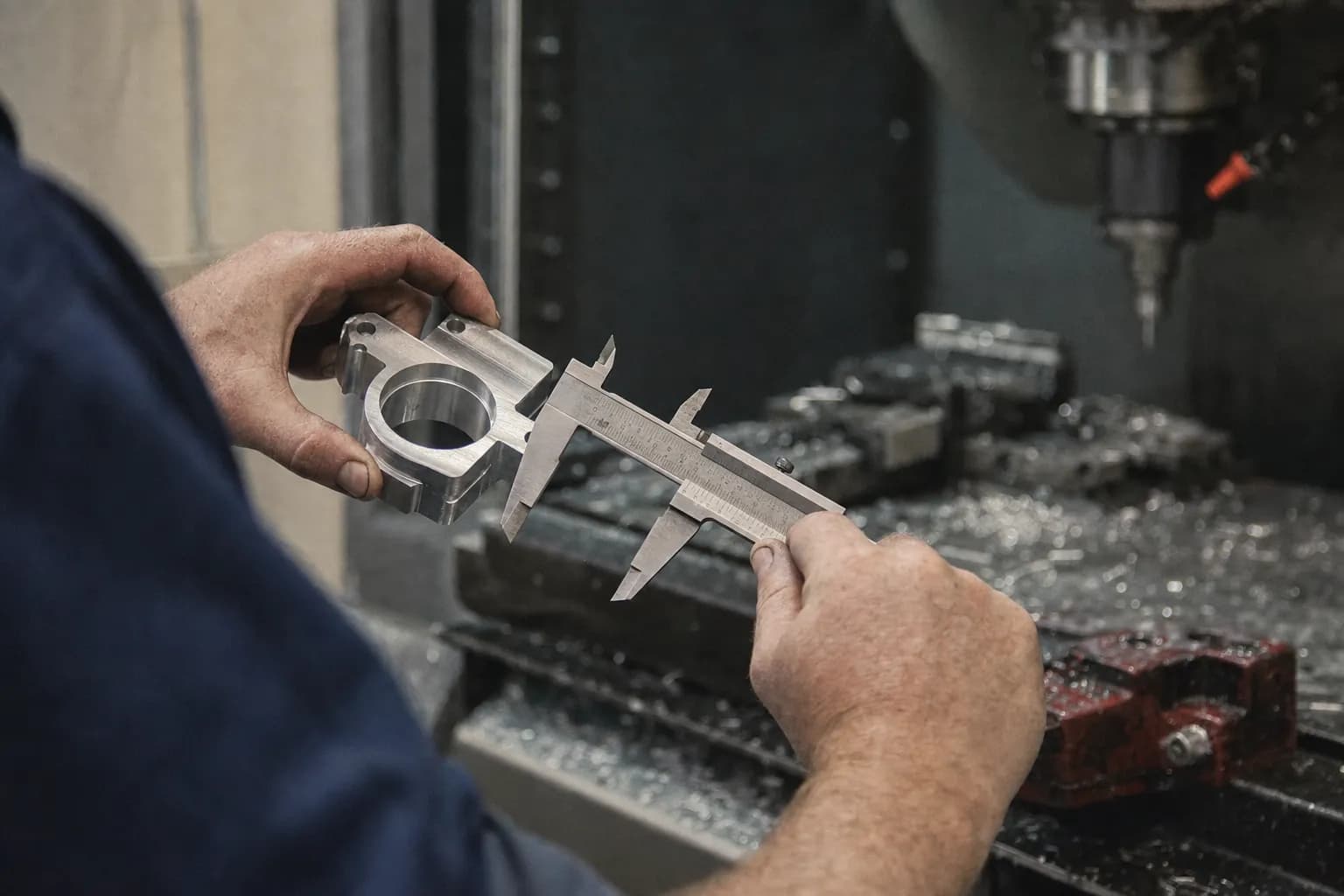
How work moves in specialty manufacturing
It starts with a request for quote, often a drawing and a quantity. Estimating works out material, routing and labor, sometimes with an engineer's help, and asks vendors for pricing on anything bought or sent out. Sales sends the quote and follows up. When the order comes in, it may not match the quote: a different quantity, a revised drawing, a tighter date.
Engineering reviews the order, releases or revises the drawing, and sometimes sends it back to the customer for approval. Purchasing orders material and schedules outside processing. Production planning builds the job: a traveler with the routing, the operations at each work center, the revision and the inspection points. The job moves across the floor, out to a vendor and back, through final inspection and into shipping, where the packing list and any certificates the customer asked for go in the box. Accounting invoices it and, later, someone compares what the job cost to what it was quoted.
Where it usually breaks
The traveler carries less than the order
Sales agreed to a special finish. The customer approved a revised drawing by email. Engineering noted a tolerance change in the job folder. The traveler shows the part number and the old revision. That is the handoff gap, and it shows up as scrap, rework and parts made correctly to the wrong drawing. The guide on promises that never reach the crew applies to the floor as much as to field crews.
Drawing approvals wait on nobody in particular
A job cannot release until the customer signs off on a drawing or an engineer approves a deviation. Nothing reminds anyone, and the job sits in a folder until the due date is close. That is approval drag. The guide on nobody knowing who approved what covers how to record the decision and the person.
Jobs vanish into outside processing
Parts go out for plating or heat treat. The ERP shows the operation as open. The actual status, the due-back date and the certificate that must come with them live in a spreadsheet on the purchasing lead's desktop. That is the invisible queue. The guide on spreadsheets that became the system of record walks through how to find these.
Nobody knows what the job really cost
Labor is clocked against the wrong job, or not clocked at all. Scrap and rework are not recorded. The quote-to-actual comparison is done by hand months later, if at all, so the next quote repeats the same guess. That is the re-entry trap at the end of the line. See the guide on estimates that don't match actual job costs.
The first workflow we usually look at
Order release: from the signed order to the first operation on the floor. We follow a handful of recent jobs backward from the floor to the quote and note every place a detail was agreed, changed or approved, and whether it reached the traveler. We sit with the planner while they build a job and with the lead at the first work center while they read one. The questions the lead has to walk to the office to ask are the fields the release is missing.
When release gathers the order, the current revision, the approvals and the agreed exceptions in one place, the traveler carries them, and inspection and shipping inherit them.
The systems in the picture
A specialty manufacturer usually runs some mix of these:
- An ERP or MRP system for orders, routings, purchasing and inventory
- CAD and a drawing or document vault, with its own revision history
- An accounting system, sometimes inside the ERP
- Printed travelers and work center whiteboards
- Shop floor time clocks or terminals, where they exist
- Spreadsheets for outside processing, quoting and the schedule
- Email for customer drawings, approvals and change requests
What a Workflow Spec looks like here
A Workflow Spec for a specialty manufacturer is $15,000, fixed, and done on site. We spend time at estimating, engineering, the planner's desk and the first work centers, and we walk a few jobs from quote to ship. We interview the people who touch an order, measure how long real jobs wait at release today and count how often the floor has to ask a question the order already answered. You get the workflow map, the business case, an adoption design built for the floor leads and planners who would use the tool, and a fixed proposal for the build. The answer can be not to build. Details are on how we work.
Questions people ask
What do you mean by a specialty manufacturer?
A manufacturer where most orders are made to a customer's drawing or configured to order in low volumes, so each job carries its own details. Custom fabrication, engineered equipment, machined parts and assemblies built to order are typical.
Why start between the quote and the floor?
Because that is where one job's details pass through the most hands: sales, estimating, engineering, purchasing and production planning. Every one of them can change something, and the traveler rarely shows all of it.
Do you replace our ERP or MRP system?
No. Tools we build read and write through the ERP you already run and never become a second system of record for orders, routings or inventory.
What about outside processing, like plating or heat treat?
Parts sent out to a vendor are a common place for jobs to disappear. Who sent them, when they are due back and what certificates must come with them is often tracked on a spreadsheet one person keeps.
Can you help with quoting speed?
Sometimes that is the right first workflow. If quotes wait on engineering questions or on pricing from vendors, the Spec maps where they wait and whether a tool shortens it.
Next step
How we can help
Start with a free twenty-minute fit call. If the workflow, the sponsor and the path to access are real, the next step is a Workflow Spec.
- Custom workflow software for field operations
- AI implementation for operations teams
- See the WERCS case
Fox & Santiago, Genesee, Idaho. Home territory: the Inland Northwest, where we respond fastest. We fly anywhere in the United States for paid engagements.