Industry
Utility and infrastructure contractors
Utility and infrastructure contractors usually break at daily production: crews install footage, poles, services and restorations against an owner's work order, and the foreman's quantities, redlines and photos reach the office days later to be retyped into the owner's billing format. Fixing it means each crew's units are recorded once at the end of the day, matched to the work order, and ready for the owner's inspector and the pay application.
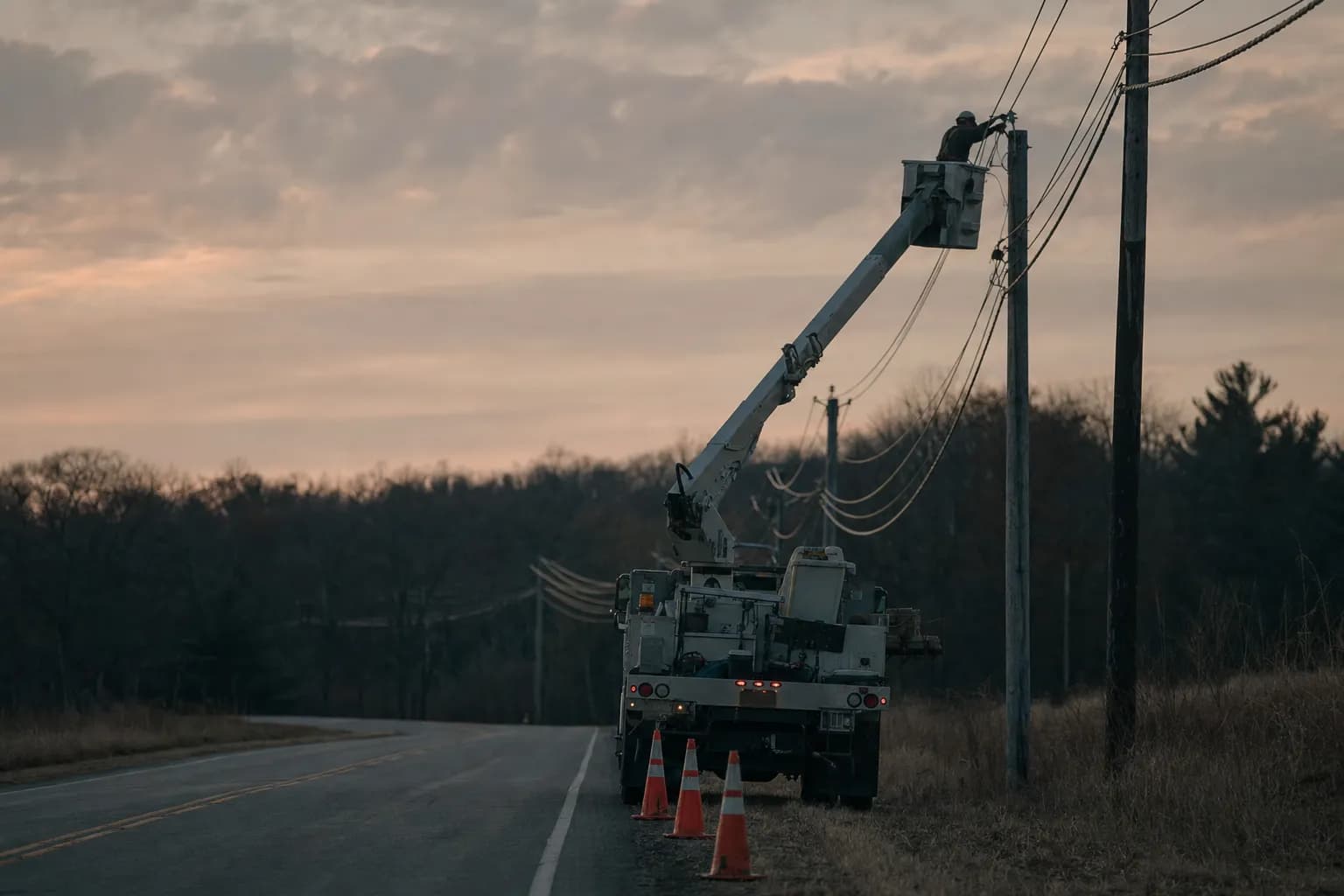
How work moves for utility and infrastructure contractors
Most work arrives as a work order from a utility, municipality or network owner, issued under a master agreement with a unit price list. A work order might be a new service line, a stretch of conduit, a pole replacement or a main repair. Some come in batches for the season. Some come in as an emergency at two in the morning.
The office groups work orders into jobs, requests locates, arranges permits and traffic control, and assigns crews and equipment. Owner-furnished material is picked up from the owner's yard and signed for. Subcontractors, such as drilling, restoration or traffic control outfits, are scheduled alongside your own crews.
In the field, the foreman runs the day: digs, bores, sets, pulls, backfills and restores. Plans change against what is actually in the ground. At the end of the day the foreman records production: units installed by type, crew hours, equipment hours, material used and anything outside the work order. Redlines go on the print. Photos go on a phone. The owner's inspector checks the work, sometimes the same day, sometimes weeks later. Billing turns the production into the owner's unit codes, attaches backup, and submits a pay application that the owner reviews line by line.
Where it usually breaks
Production reaches the office late and in the wrong shape
The foreman's sheet uses crew shorthand. The owner wants its own unit codes. Someone in the office translates one to the other days later and calls the foreman when a number looks wrong. That is the field-to-office split. The guide on job tickets that reach the office late shows how to measure the lag and where it starts.
Billing waits on backup nobody can find
A work order is finished, but the pay application cannot go until the photos, redlines, restoration records and inspector's sign-off are attached. Each is somewhere different. That is the invisible queue: finished work that is not yet billable, with no list of what is holding it. See the guide on invoices that go out days after the work.
Extra work in the ground is not approved in writing
The crew hits an unmarked line or finds the existing pipe is not where the print shows it. The owner's field rep says to go ahead. Weeks later the extra units are disputed because the approval was verbal. That is approval drag. The guide on nobody knowing who approved what covers how to record the decision at the moment it is made.
Subcontractors and crews work from different plans
Restoration comes in after your crew, working from what they were told by phone. Their quantities do not match yours, and the owner sees both. That is the handoff gap. The guide on subcontractors not knowing what was agreed is a good place to start.
The first workflow we usually look at
Daily production to pay application. We ride with a few crews, watch the foreman write up the day, and follow those sheets to the office. We sit with the person who translates them into the owner's format and note every call they make back to the field. We trace a handful of finished work orders to see how long each waited for backup before it could be billed, and what it was waiting for.
When a foreman records units once, in the owner's codes, against the work order, with photos and redlines attached, the office builds pay applications instead of reconstructing the day.
The systems in the picture
A utility and infrastructure contractor usually runs some mix of these:
- An accounting or construction ERP system with job costing
- Estimating and bid software for master agreement pricing
- Paper daily production sheets and printed plans for redlines
- Owner portals for work orders, inspections and pay applications
- Equipment tracking and telematics for trucks and heavy iron
- Spreadsheets for work order status, unit tracking and crew assignments
- Phones, group texts and photos on personal devices
What a Workflow Spec looks like here
A Workflow Spec for a utility or infrastructure contractor is $15,000, fixed, and done on site. We ride with crews, stand at the yard in the morning and sit in the office where production sheets land. We interview foremen, the scheduler, the person who builds pay applications and your project managers, and we measure how long finished work orders wait before they are billed today. You get the workflow map, the business case, an adoption design built for the foremen who would use the tool, and a fixed proposal for the build. The Spec can end in a recommendation against building. Details are on how we work.
Questions people ask
What kind of utility contractors do you work with?
Contractors who build and maintain underground and overhead networks for owners: water, sewer, gas, power and telecom installation, directional drilling, excavation and restoration crews, often billed by the unit against master agreements.
Why is daily production reporting the usual problem?
Because it is the basis for billing, job costing and the owner's inspection, and it is written by a foreman at the end of a long day. Every unit that is missed, miscounted or not tied to the right work order is revenue that waits or never arrives.
What about redlines and as-builts?
Redlines drawn on paper prints in the field often wait weeks to become as-builts. When the owner will not close a work order without them, they hold up payment just as much as missing quantities.
Do you replace our estimating or job costing software?
No. Tools we build read and write through the systems you already run and never become a second system of record for jobs, units or costs.
Can a tool handle the owner's own billing format?
That is exactly what the Spec maps. Each owner tends to want quantities in its own unit codes and templates, and a tool is specified around the owners you actually bill.
Next step
How we can help
Start with a free twenty-minute fit call. If the workflow, the sponsor and the path to access are real, the next step is a Workflow Spec.
Fox & Santiago, Genesee, Idaho. Home territory: the Inland Northwest, where we respond fastest. We fly anywhere in the United States for paid engagements.