
Industry
Restaurants and hospitality
Restaurants and hospitality businesses usually break between the front of house, the kitchen and the office: online and phone orders are retyped into the point of sale, the menu and prices live in several places at once, and inventory, schedules and invoices are rebuilt by a manager after close. Fixing it means an order or a change is made once and every screen, menu and report that needs it follows.
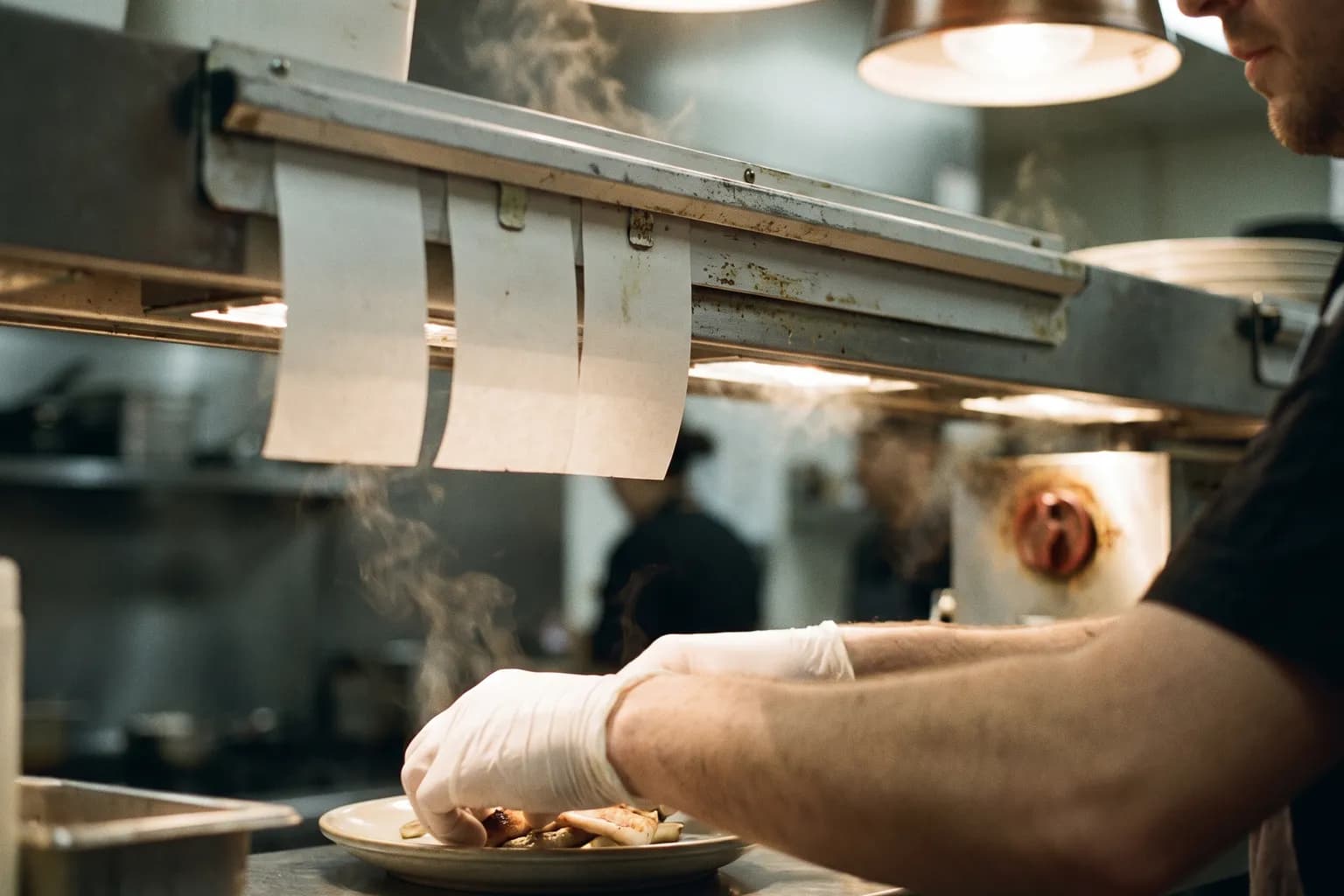
How work moves in a restaurant or hospitality business
Orders arrive from the dining room, the phone, the restaurant's own website and third-party delivery apps, each with its own screen or tablet. Servers ring in tables on the point of sale. The kitchen works tickets, eighty-sixes items as they run out, and calls orders ready. Pickup and delivery customers want an accurate time. In a hospitality business, reservations, events and room bookings add their own calendars to the same day.
Before and after service, the office runs. A manager counts inventory, places orders with food and beverage vendors, receives deliveries and checks invoices against what arrived. Schedules are built against expected covers and adjusted when someone calls out. Tips, timecards and payroll are reconciled. The menu changes with the season and the supplier's prices, and every change has to reach the dining room menu, the website, the point of sale and every delivery app.
The roles are an owner or general manager, a chef or kitchen manager, front-of-house leads, servers, cooks and dishwashers, and often a bookkeeper who comes in once a week.
Where it usually breaks
Orders are retyped from tablet to kitchen
A phone order is written on a pad and keyed into the point of sale. A delivery app order arrives on its own tablet and is retyped so the kitchen sees it. Every copy is a chance for a missed modifier or a wrong pickup time. That is the re-entry trap.
The menu lives in too many places
The kitchen runs out of an item. The dining room knows. The website and the delivery apps keep selling it until someone remembers to turn it off on each. Price changes go the same way. That is the handoff gap.
Ordering and receiving run on memory
The kitchen manager reorders when something runs low or out. Deliveries are signed for during prep and the invoice is checked against the order later, if at all. Short shipments and price changes slip through. That is the invisible queue. See reorders that happen only when something runs out and vendor invoices that don't match purchase orders.
The manager rebuilds the night after close
Sales, tips, labor, waste and comps come from different screens and paper. The manager assembles them at the end of a long shift, and payroll finds the overtime later. That is the field-to-office split, with the floor as the field. See overtime surprises at payroll.
Work we have built here
We built online ordering for The Pastime Restaurant: customers order pickup from the restaurant's own site, pick a time and pay online, and the order lands on a screen in the kitchen with its pickup time. The kitchen marks orders ready, turns items off when they run out, changes prices and pauses online orders on a busy night, and the website follows instantly. That work is now the base of a restaurant platform for more locations.
The first workflow we usually look at
Usually the path from an order placed, on any channel, to the food in the customer's hands, because it runs every service and its gaps show up at the pass and in refunds. For a business whose orders already flow, it is often the back office: ordering, receiving and invoice matching, or the end-of-night close. The Spec decides from what we see.
We work a lunch and a dinner service alongside the team, watch the kitchen and the pass, sit with the manager through ordering and close, and count the orders and changes that are made more than once.
The systems in the picture
A restaurant or hospitality business usually runs some mix of these:
- A point of sale, often with its own online ordering and kitchen display
- Third-party delivery apps, each on its own tablet
- A reservation or booking system
- Scheduling, timekeeping and payroll
- Vendor ordering portals, paper invoices and an accounting system
- Spreadsheets for inventory counts, recipes, food cost and prep lists
What a Workflow Spec looks like here
A Workflow Spec for a restaurant or hospitality business is priced by deployment, and takes up to five business days on site, including real services. We work alongside the kitchen and the floor, sit with managers before open and after close, and interview the people who touch an order from the first ring to the bank deposit. You get the workflow map, the business case, an adoption design built for the people who would use the tool on a busy night, and a fixed proposal for the build. The answer can be not to build. Details are on how we work.
Questions people ask
Which businesses is this page about?
Independent restaurants and small groups, cafes and bars, caterers, and hospitality businesses such as inns and event venues: places where orders, reservations, the kitchen and the back office all move on the same busy nights.
Do you replace our point of sale?
No. Tools we build read and write through the systems you already run. Where a restaurant has no ordering of its own, we have built that too.
Third-party delivery apps take a large cut. Can you help?
A restaurant's own ordering site, with pickup times, card payment and orders straight to the kitchen, is something we have built. Whether it fits your business is a question for the Spec.
Can a kitchen really run a tool on a busy night?
Only if it is built for that night. The restaurant ordering we built lets the kitchen mark orders ready, turn items off when they run out and pause online orders, all from one screen.
What about the back office: inventory, ordering and labor?
Those are fair first workflows. Food costs and schedules are usually rebuilt by a manager after close, and that time is countable.
Next step
How we can help
Start with a free twenty-minute fit call. If the workflow, the sponsor and the path to access are real, the next step is a Workflow Spec.
- Field-to-office workflow automation
- Custom operations software, built on the systems you already run
- See the WERCS case
Fox & Santiago, Genesee, Idaho. We work nationwide, for clients across the United States, from our headquarters in Genesee, Idaho.